Strange soirées
Posted: 18 March 2012 Filed under: Artists, Inspiration, Rona | Tags: art, artists, Bela Lugosi, Diane Arbus, Dutch Golden Age, Frans Hals, inspiration, Jean Dubuffet, Jim Henson, Muppets, poppets, prints, Rembrandt, Rona Green, Thomas de Keyser, Vincent Price 5 Comments
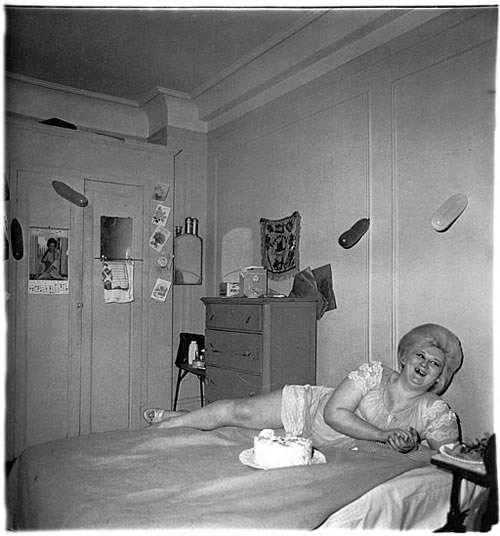
Diane Arbus, Transvestite at her Birthday Party, N.Y.C., 1969
‘For me the subject of a picture is always more important than the picture. And more complicated.’
– Diane Arbus (1923-1971)
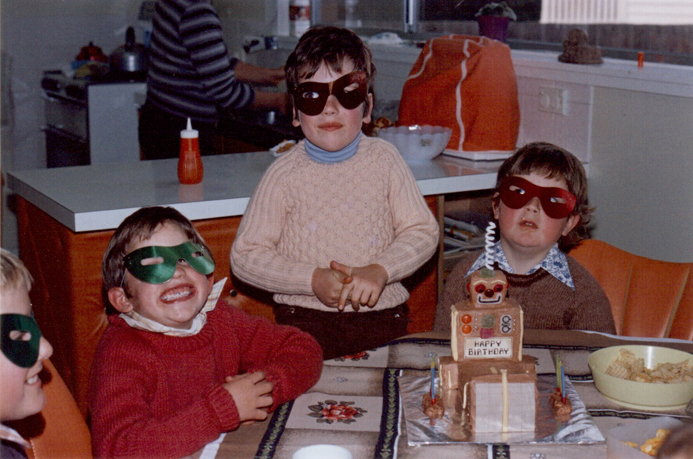
Boogie's 6th birthday party, 1978
All kinds of images fire up my imagination.
One photo in particular has intrigued me so much that I have created three different interpretations – it is a snapshot of my guy’s birthday party, illustrated above.
The first incarnation, party, was highly influenced by my love of Jean Dubuffet’s art.
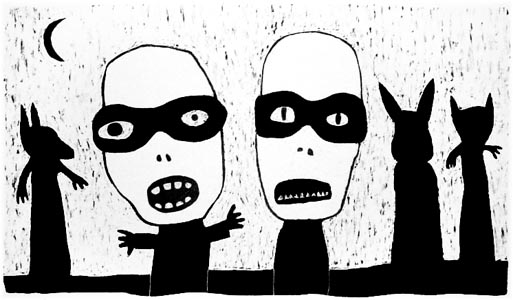
Rona Green, party, 1995, lithograph, 17 x 30 cm, edition 4
Then there was Birthday Boogies, a mixed media piece including soft sculptural objects that I call poppets.
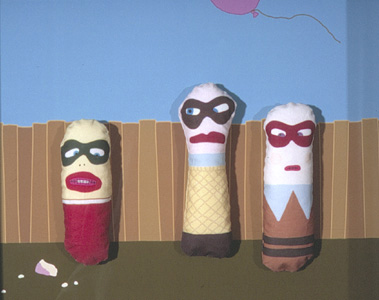
Rona Green, Birthday Boogies, 2002, mixed media, 27 x 35 x 3 cm
The poppets were born from a fondness for dolls, puppets and masks. As a kid I adored The Muppet Show produced by Jim Henson, and the colourful characters of Warner Brothers and Hanna Barbera cartoons.
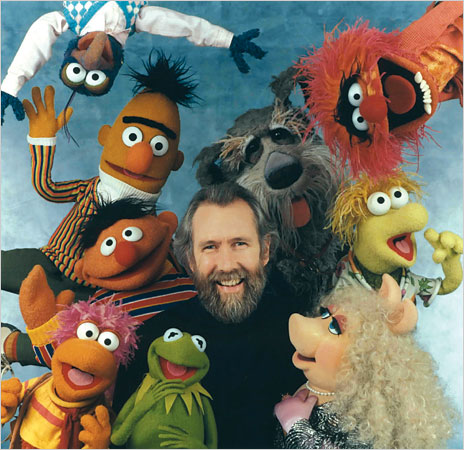
Jim Henson and Muppets
After Birthday Boogies came Secret Robot Society, which incorporated my fancy of the Dutch Golden Age of painting.
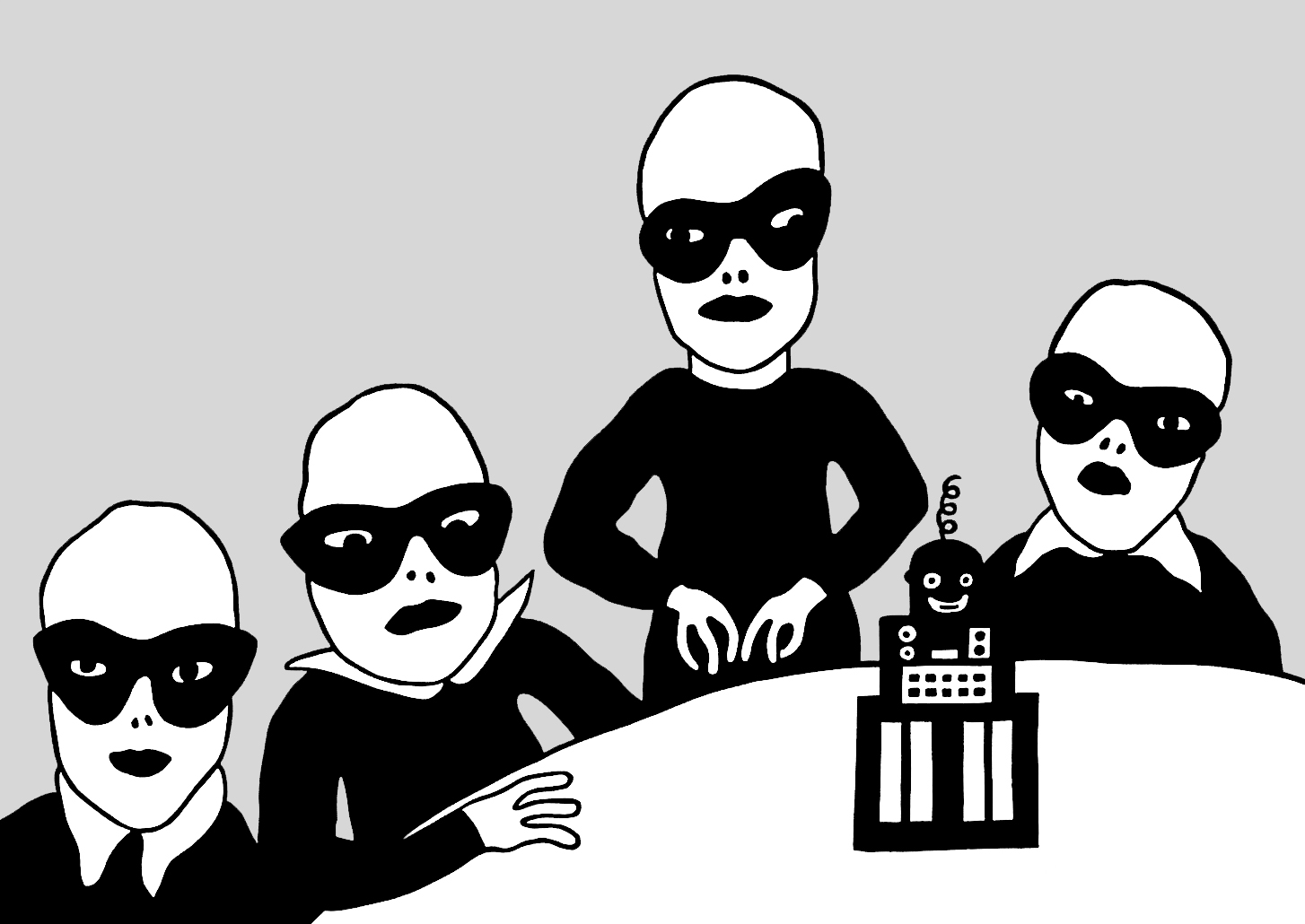
Rona Green, Secret Robot Society, 2002, linocut and watercolour, 49 x 70 cm, edition 13
Favourite artists from this period in art include Rembrandt, Frans Hals and Thomas de Keyser.
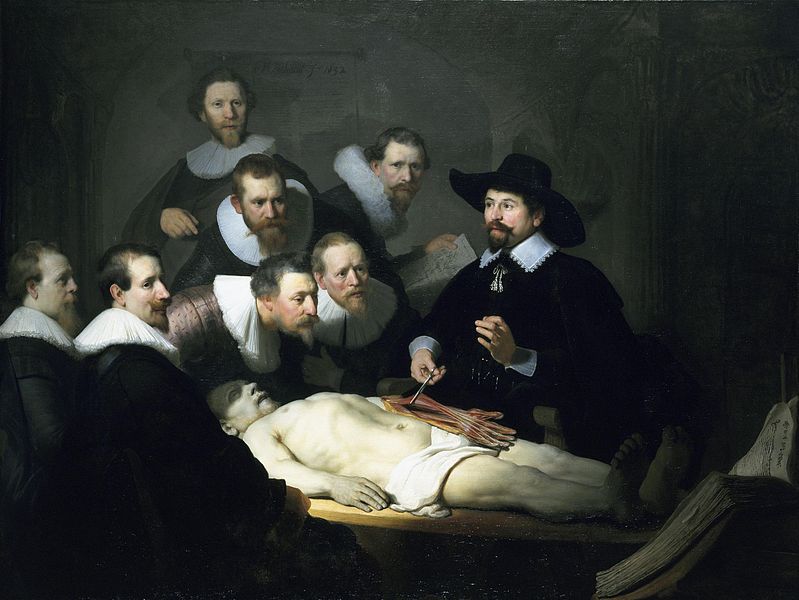
Rembrandt, The Anatomy Lesson of Dr. Nicolaes Tulp, 1632
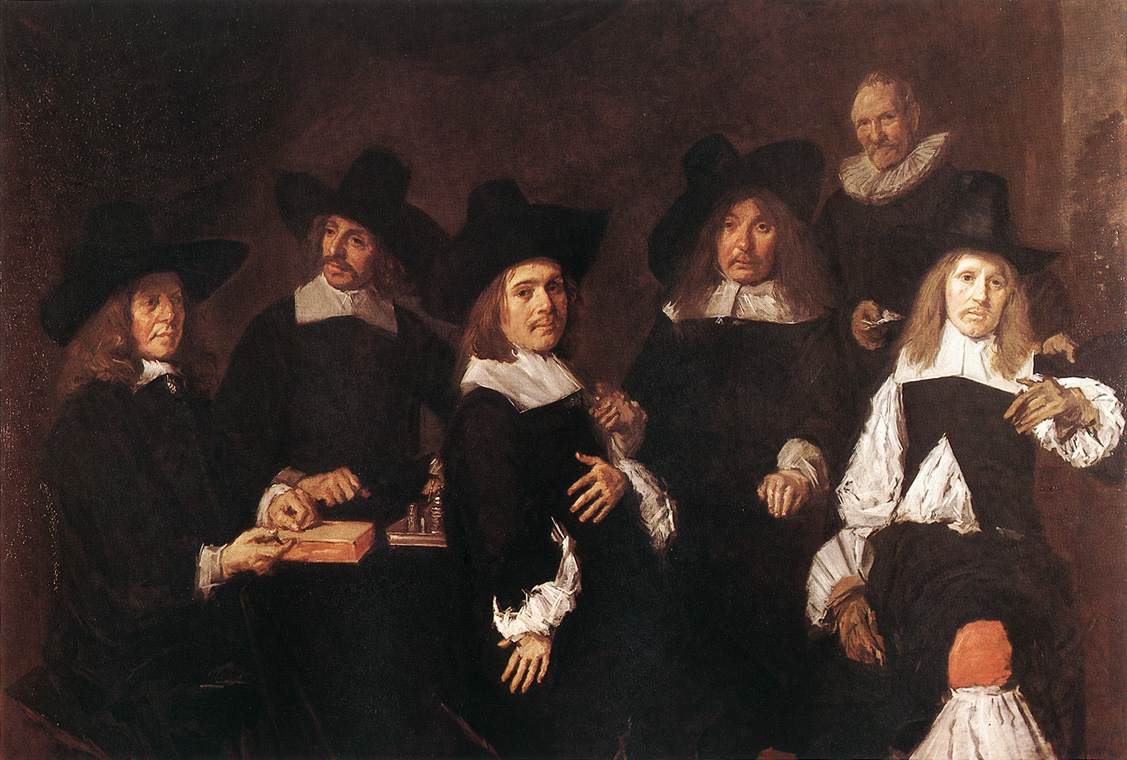
Frans Hals, Regents of the Old Men's Almshouse, 1664
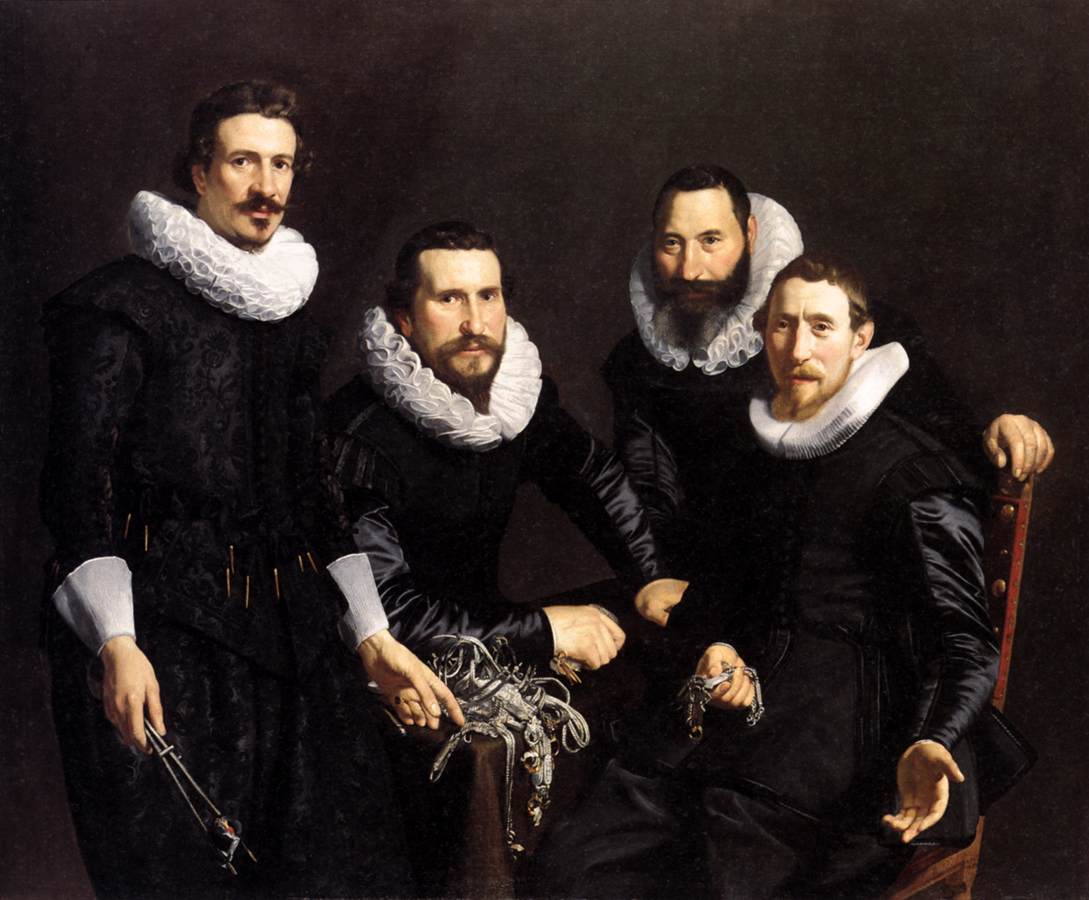
Thomas de Keyser, The Syndics of the Amsterdam Goldsmiths Guild, 1627
After making Secret Robot Society I produced two more prints – Treacherous Boys With Charisma and The Ventriloquist – to form a trio of group portraits.

Rona Green, Treacherous Boys With Charisma, 2003, linocut and watercolour, 49 x 70 cm, edition 13
My creative process is very much about collaging together an eclectic range of source material to invent something otherworldly and somewhat absurd.
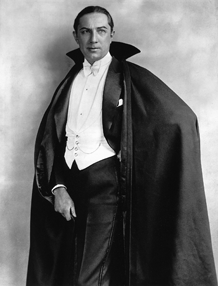
The dashing Bela Lugosi

The debonair Vincent Price
In the case of these prints I have referenced the Dutch painters along with TV shows, horror movie stars, dolls and puppets, as well as ideas about social hierarchy and esotericism.
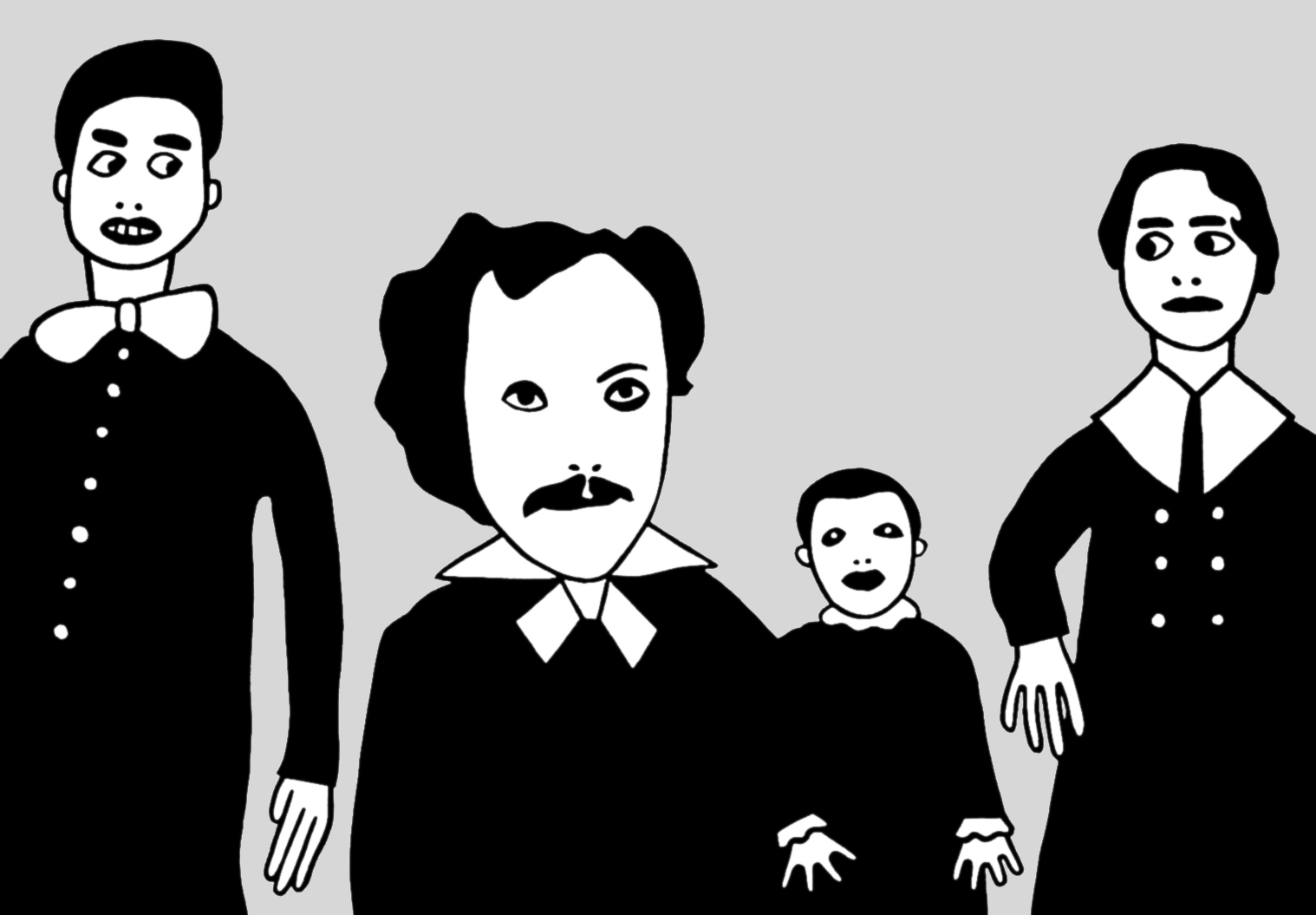
Rona Green, The Ventriloquist, 2004, linocut and watercolour, 49 x 70 cm, edition 13
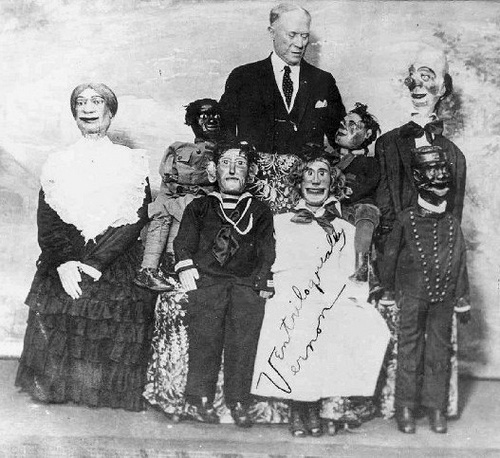
Old time ventriloquist
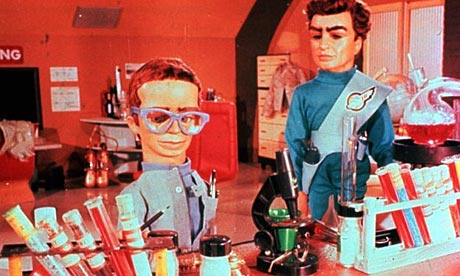
Thunderbirds - Brains and Scott
And finally I should make mention of the beloved Women’s Weekly Children’s Birthday Cake Book!
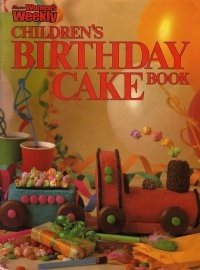
The Women's Weekly Children's Birthday Cake Book
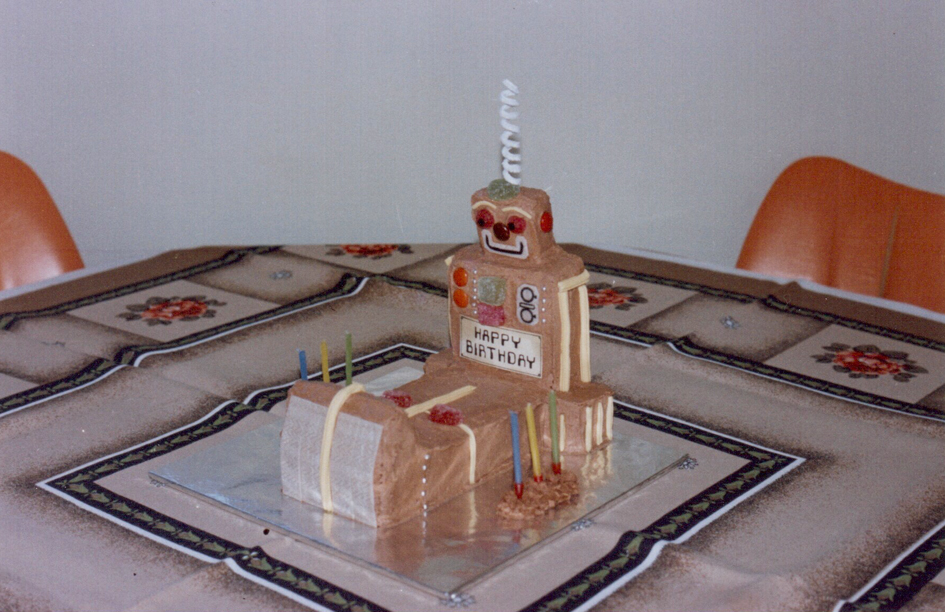
Boogie's robot cake à la The Women's Weekly Children's Birthday Cake Book
PS: From now on I will be posting every Tuesday – until then, have a good week!
Well hello, sailor!
Posted: 12 March 2012 Filed under: Rona | Tags: art, artists, Charlie Sheen, David Bowie, Dusty Rhodes, Herman Melville, inspiration, Jean Genet, Jean Paul Gaultier, Norman Sailor Jerry Collins, Otto Griebel, Paul Klee, pets, sailors, Tom of Finland 4 Comments
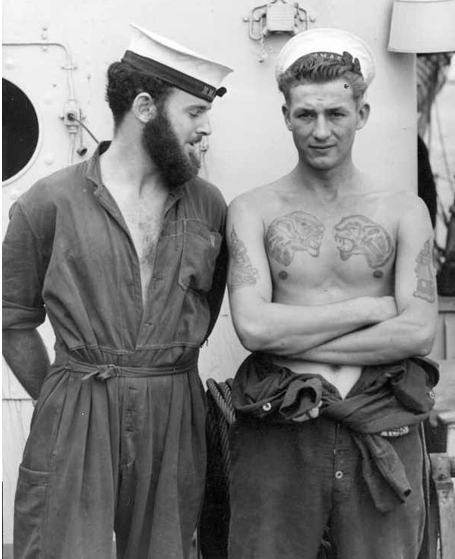
Savvy old school sailors
‘The fame of heroes owes little to the extent of their conquests and all to the success of the tributes paid to them.’
– Jean Genet (1910-1986)

Portrait of Jean Genet by Richard Avedon
I have a bit of a soft spot for sailors.
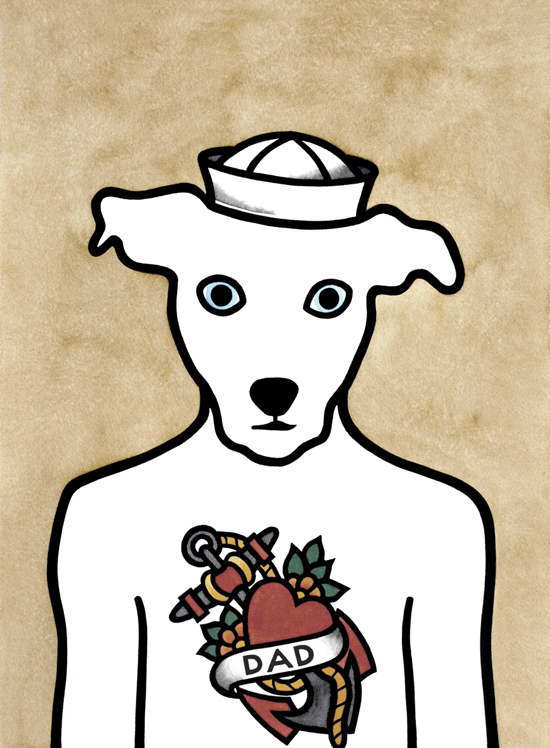
Rona Green, Rusty Steel, 2009, linocut, ink & watercolour, 38 x 28 cm, edition 13
Several of my pictures salute the sailor man including Greasy Rhys, as well as his mates Rusty Steel and Topsy Turner.
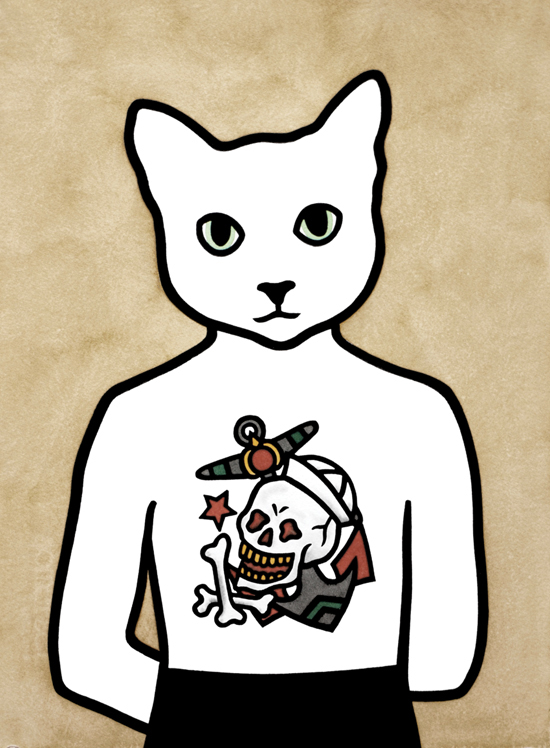
Rona Green, Topsy Turner, 2009, linocut, ink & watercolour, 38 x 28 cm, edition 13
Part of the inspiration for these works is the flash of master tattoo artist, Norman ‘Sailor Jerry’ Collins.
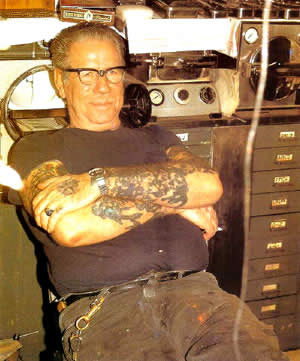
Norman 'Sailor Jerry' Collins (1911-1973)
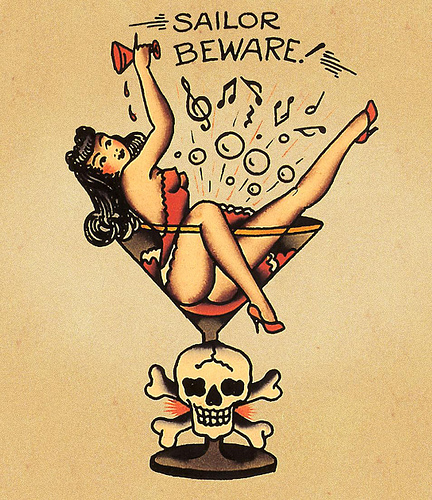
An example of Sailor Jerry tattoo flash
I am certainly not alone in my admiration of the sailor – other fans include:
Herman Melville, author.
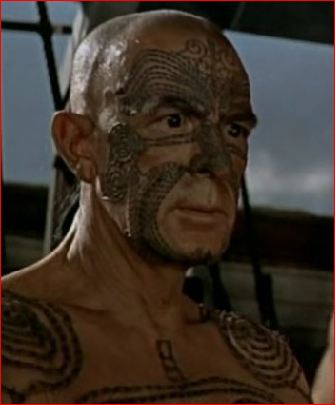
Friedrick Ledebur as Queequeg in the 1956 movie adaptation of the 1851 novel Moby Dick by Herman Melville
Jean Genet, novelist, playwright, poet, essayist and political activist.
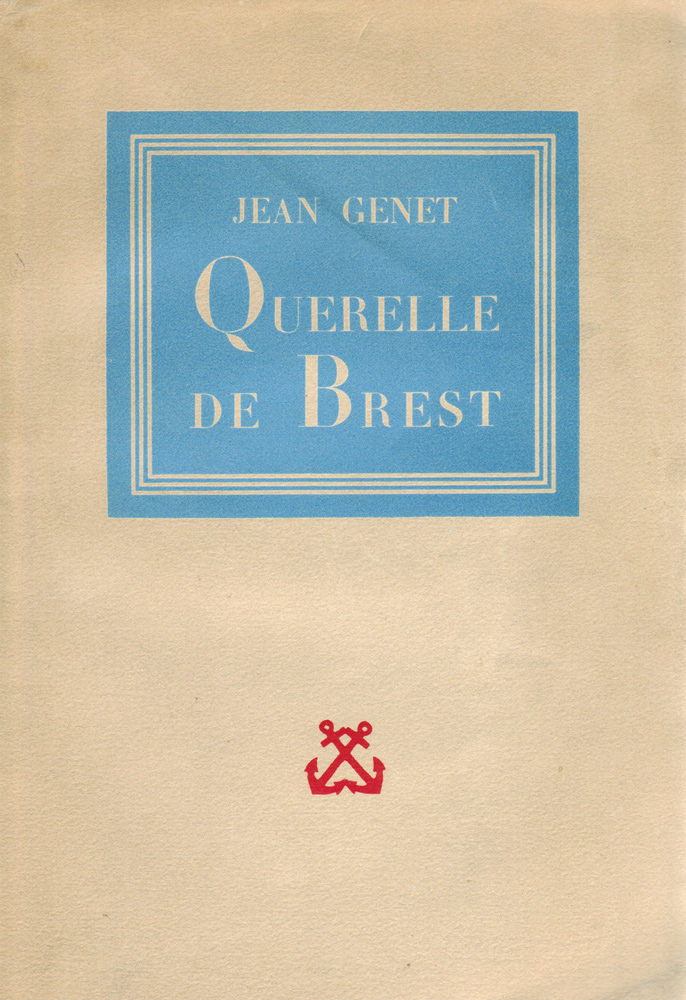
Querelle of Brest by Jean Genet
Otto Griebel, artist.
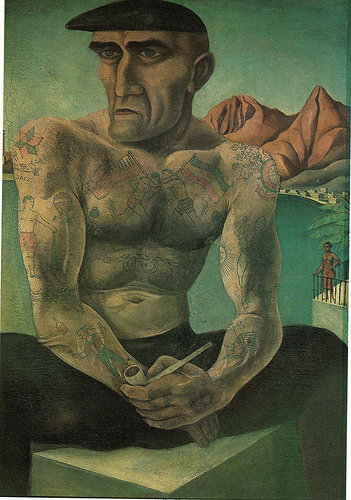
Otto Griebel, Ship Boilerman, 1920, oil on canvas
Paul Klee, artist and musician.
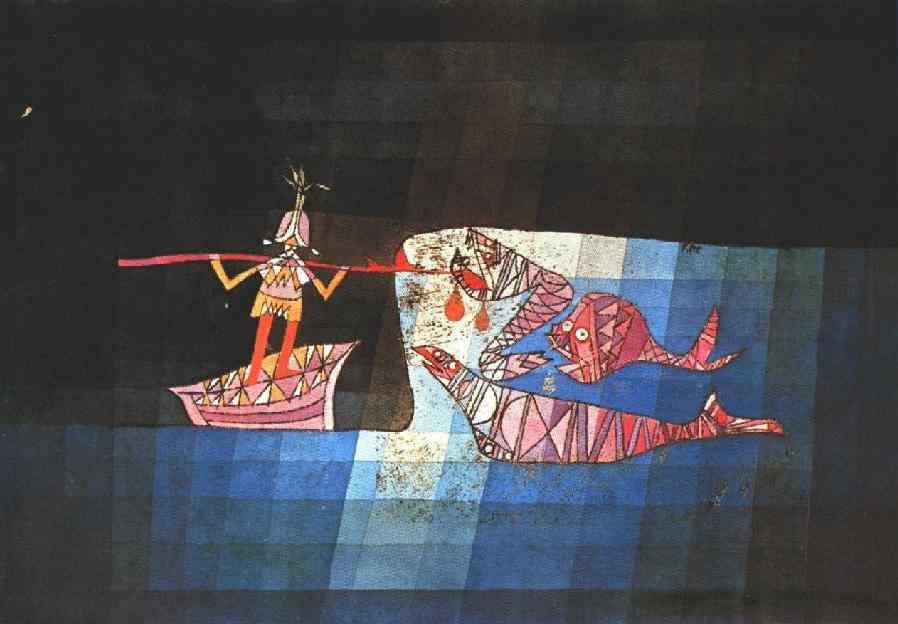
Paul Klee, Sinbad the Sailor, 1928, watercolour on paper
David Bowie, renaissance man.
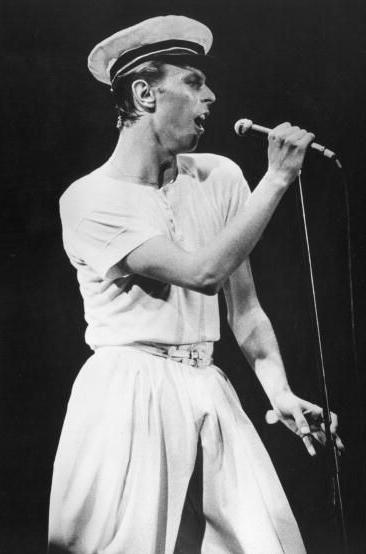
Aye aye, David Bowie!
Tom of Finland, artist.
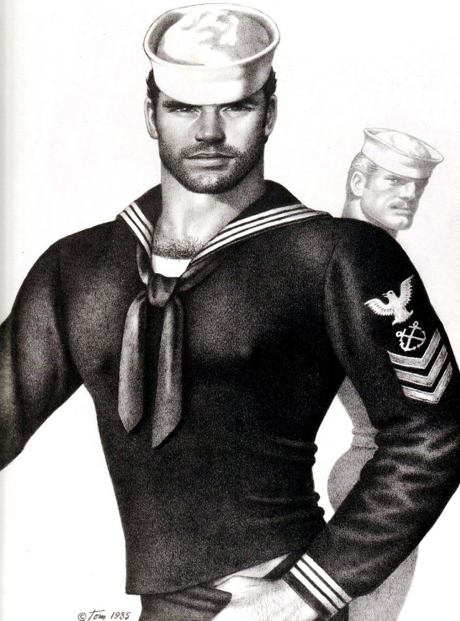
Tom of Finland, Sailors, 1985, pencil on paper
Jean Paul Gaultier, fashion designer.
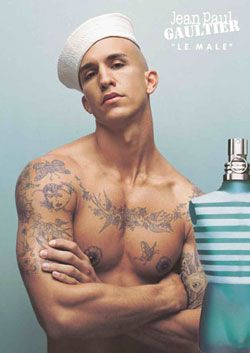
Advertisement for Jean Paul Gaultier's 'Le Male'
One of the things that particularly tickles my fancy about Navy culture is sailors nicknames.
Crew mates are given monikers such as ‘Chalky’ White, ‘Nosey’ Parker and ‘Smokey’ Cole.
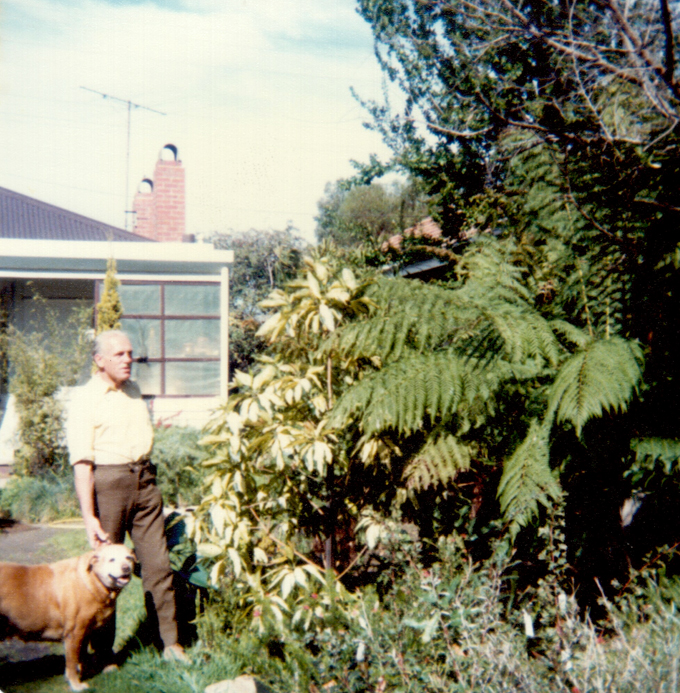
John 'Dusty' Rhodes and Bindie
The following print is a tribute to my great uncle, John ‘Dusty’ Rhodes (and it’s a tip of the hat to Bindie as well!).
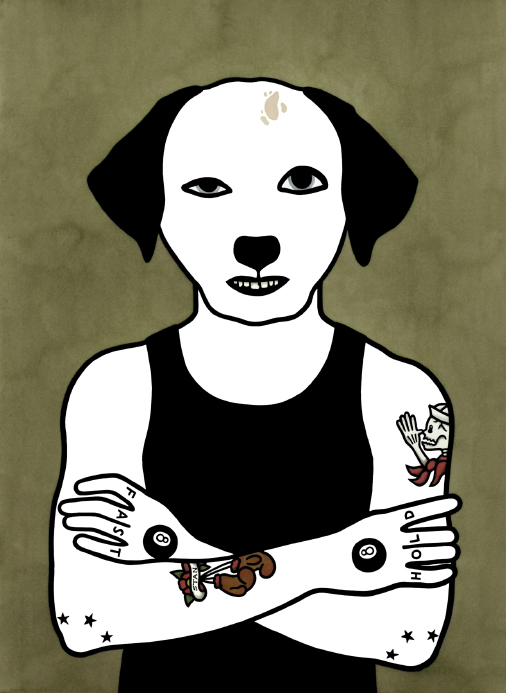
Rona Green, Dusty Rhodes, 2011, linocut, ink & watercolour, 76 x 56 cm, edition 23
You may have noticed the 8 balls on Dusty’s hands – these are a reference to the character Bean, in the movie Cadence.
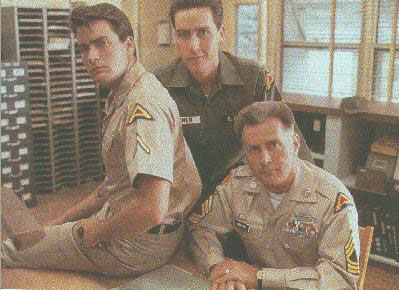
Charlie 'Bean' Sheen (pictured left) in Cadence
It’s time for me to sail away so i’ll leave you in the capable hands of Turbonegro, performing their song Sailor Man…
And here’s a bonus sailor:
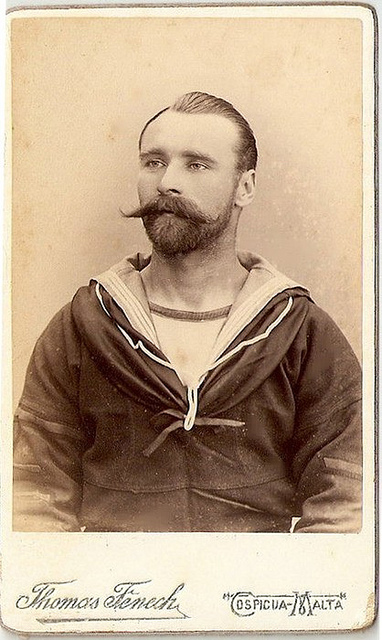
A hirsute seafarer
Hold fast!
Precocious pets
Posted: 5 March 2012 Filed under: Artists, Rona | Tags: art, artists pets, Clement Freud, Lucian Freud, pets, Rona Green 4 Comments
‘Our perfect companions never have fewer than four feet.’
– Sidonie-Gabrielle Colette (1873-1954)
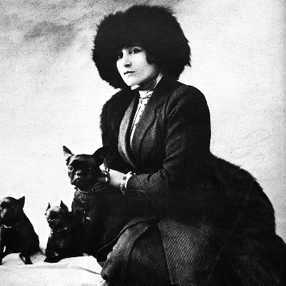
Colette and four legged friends
Pets are a favourite subject matter of mine.
The following prints are a set of portraits I created in homage to my pets Freddie, Byrd, Shane and Googie.
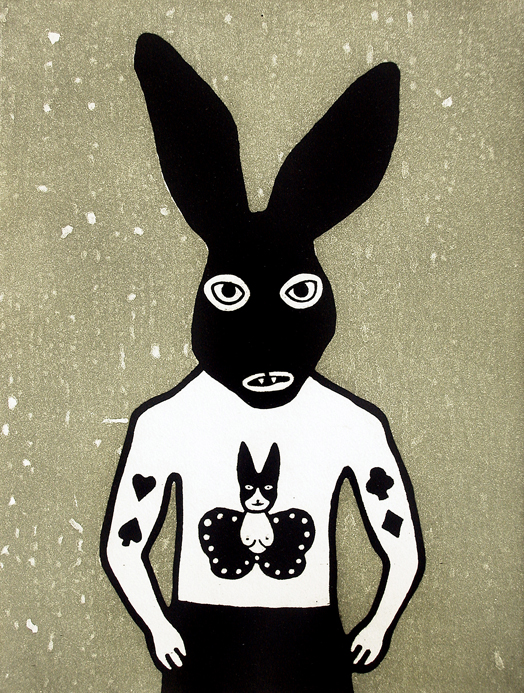
Rona Green, Lagomorphia, 2005, etching
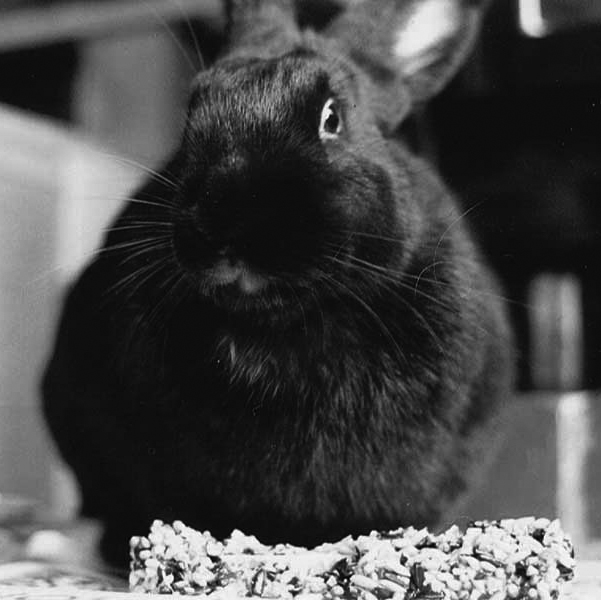
Freddie
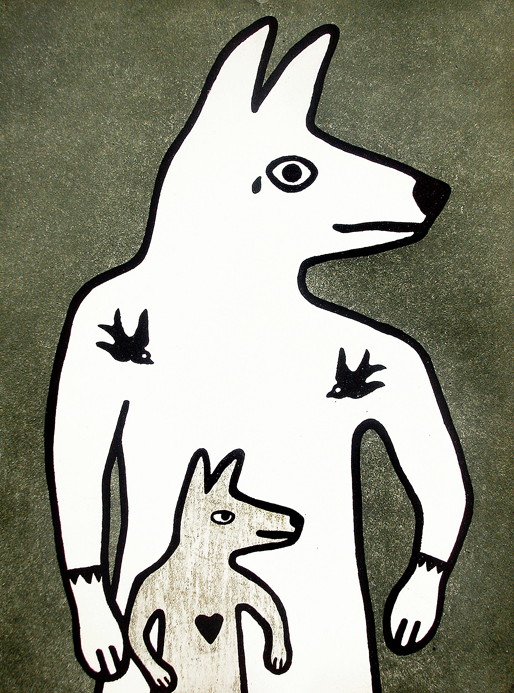
Rona Green, white Byrd, 2005, etching
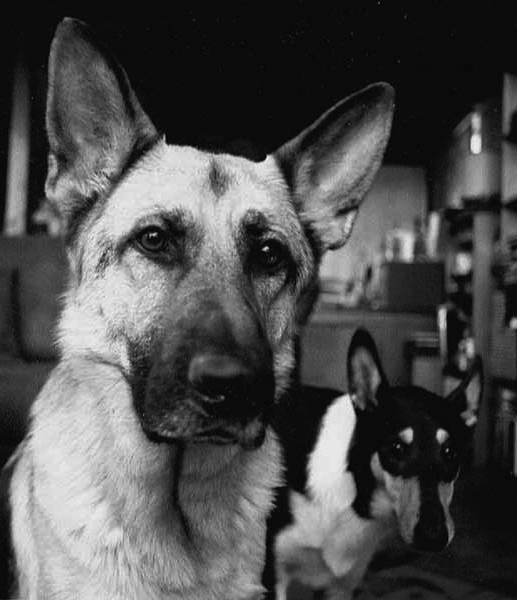
Byrd and Shane
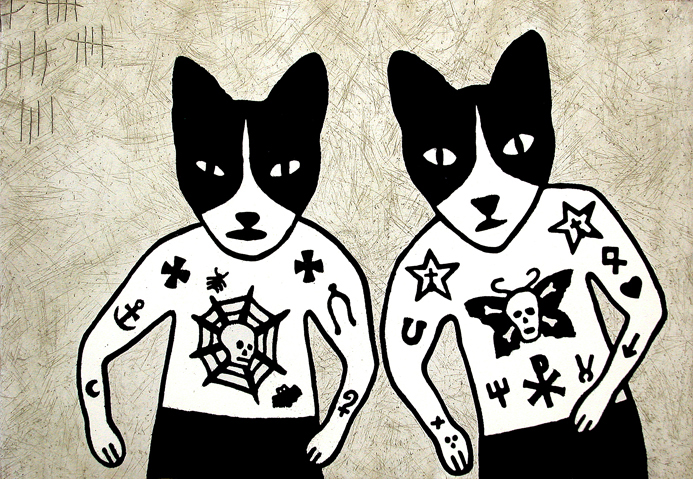
Rona Green, pretty boys, 2005, etching
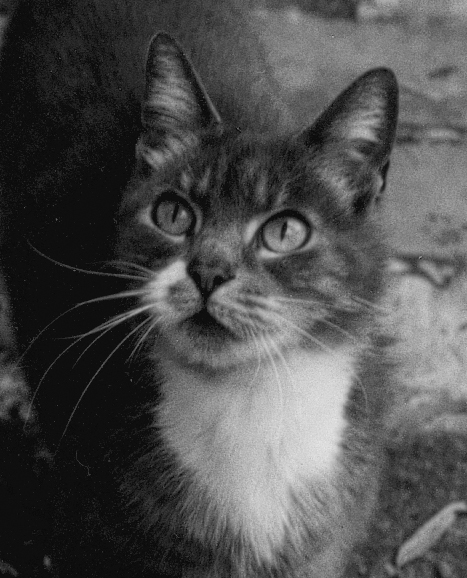
Googie
Another artist – whom I adore – who was also inspired to depict pets was Lucian Freud (1922-2011).
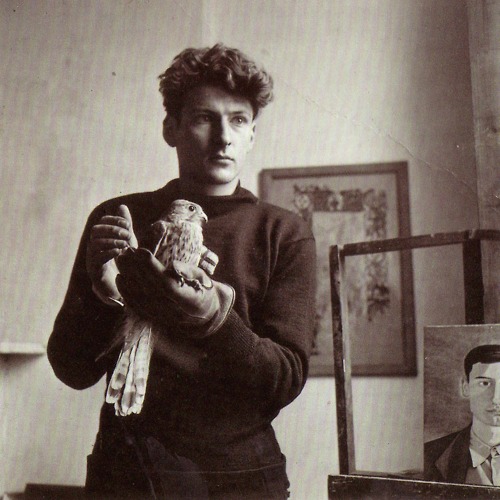
Lucian Freud, 1947
Lucian once said ‘A painter’s tastes must grow out of what so obsesses him in life that he never has to ask himself what it is suitable for him to do in art.’
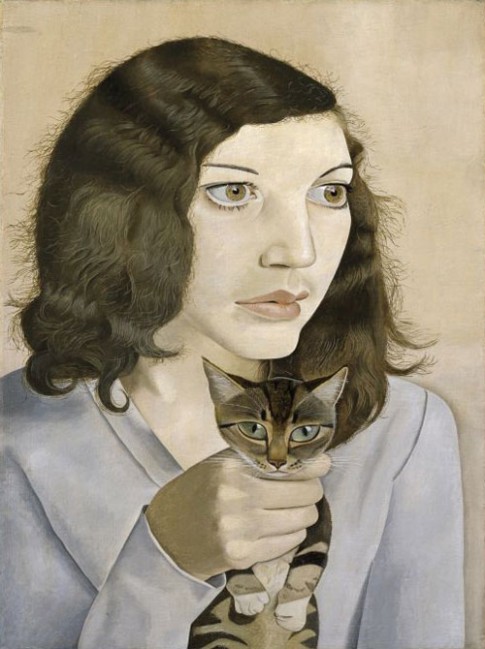
Lucian Freud, Girl with a Kitten, 1947, oil on canvas
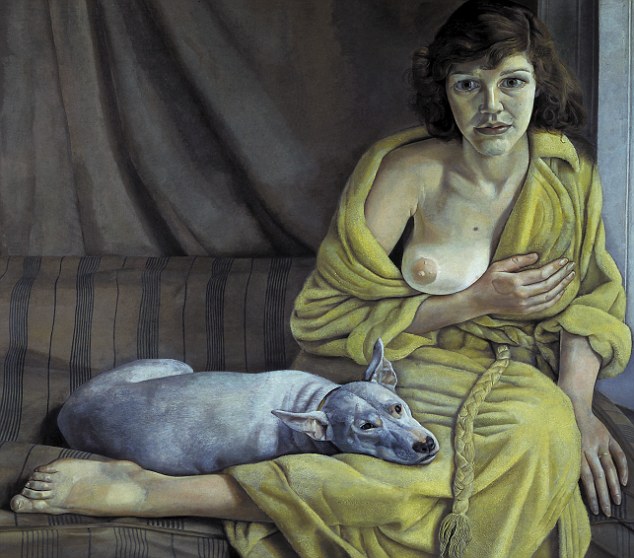
Lucian Freud, Girl with a White Dog, 1951, oil on canvas
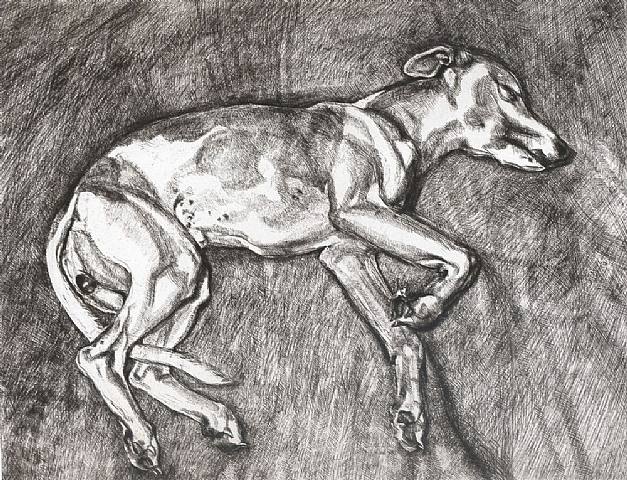
Lucian Freud, Eli, 2002, etching
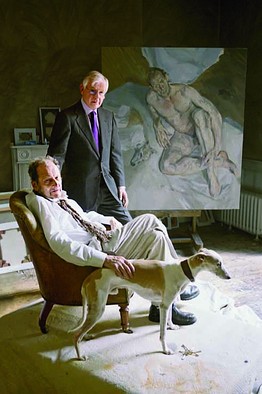
Lucian Freud and Eli with gallerist William Acquavella in front of the painting Portrait of the Hound, 2011
Lucian’s brother, Clement Freud (1924-2009), a broadcaster, writer, politician and chef, was also an animal fan.
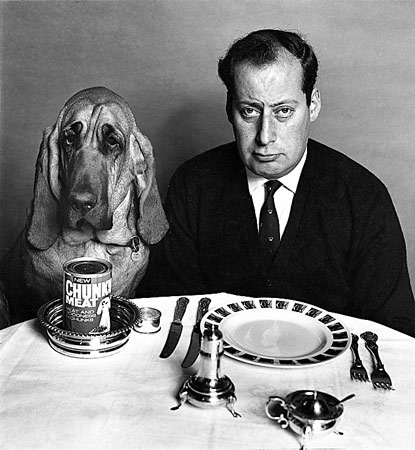
Clement Freud and Henry, 1966
So much so that he featured in a series of dog food commercials in the 1960’s:
Enjoy!
Who do you love?
Posted: 26 February 2012 Filed under: Artists, Rona | Tags: Adolf Wolfli, art, artist, Hans Prinzhorn, inspiration, Jean Dubuffet, Rona Green 12 Comments
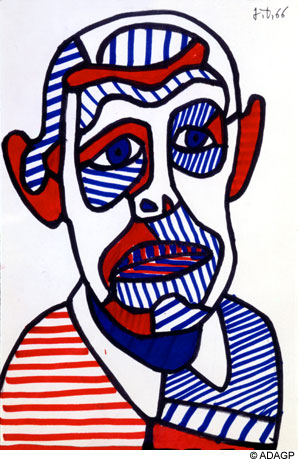
Jean Dubuffet, Self Portrait, 1966, marker pen on paper
‘For a very long time I was too humble […] and lacking in confidence and composure; and I suffered cruelly because of this, appearing in my own eyes to be nothing more than the most abject dog turd. It was only at a late stage – when in the end I had resigned myself to living like a dog turd without shame or regret and making the best of the situation – that it dawned on me that everyone else was also a dog turd.’
– Jean Dubuffet (1901-1985)
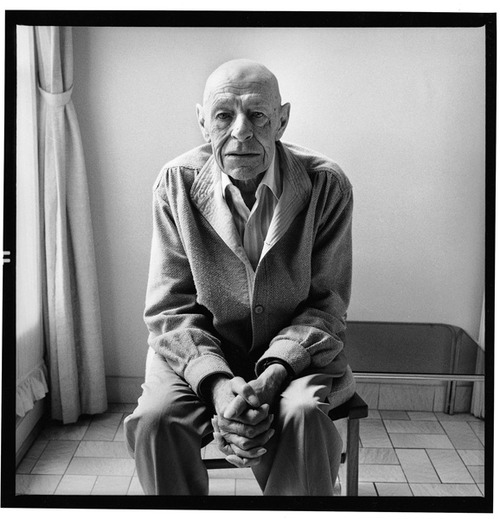
Portrait of Jean Dubuffet by Marc Trivier
I love Jean Dubuffet.
While studying at university, one afternoon in the library when flipping through books in the art section, I turned a page and saw a reproduction of Man Eating a Small Stone by Dubuffet.
It turned my world upside down.
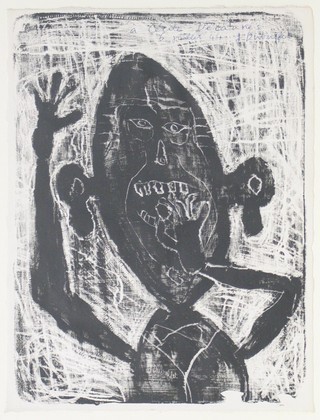
Jean Dubuffet, Man Eating a Small Stone, 1944, lithograph
Early in his life, Dubuffet was influenced by the German psychiatrist and art historian Hans Prinzhorn, and his book Bildnerei der Geisteskranken (Artistry of the Mentally Ill) published in 1922.

Hans Prinzhorn 1886-1933
Dubuffet collected an enormous amount of work by psychiatric patients, prisoners and children. He invented the term Art Brut (raw art) for the work produced by these non-professional artists. The collection is now housed at the Musée de l’Art Brut in Lausanne, Switzerland.
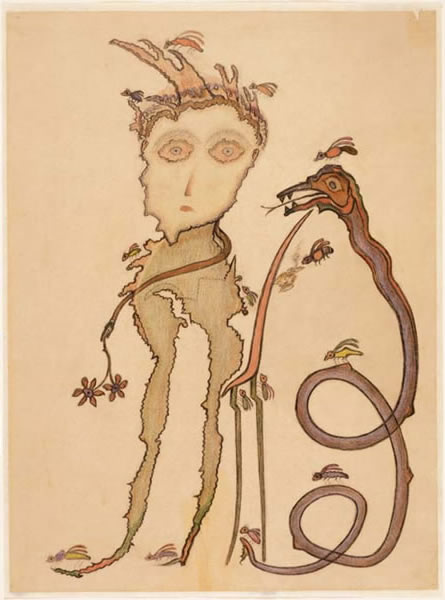
Heinrich Anton Müller, Man with flies and snake, c 1920s, crayon drawing

Adolf Wölfli, Saint Adolf wearing glasses, 1924, pencil on paper
Dubuffet once declared ‘For me, insanity is super sanity. The normal is psychotic. Normal means lack of imagination, lack of creativity.’

Jean Dubuffet, Pisser at the wall, 1945, lithograph
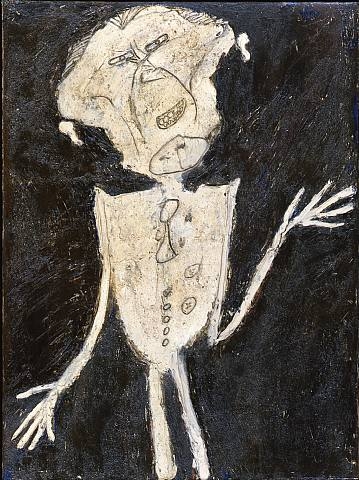
Jean Dubuffet, Bertelé Mondain, 1946, oil on canvas
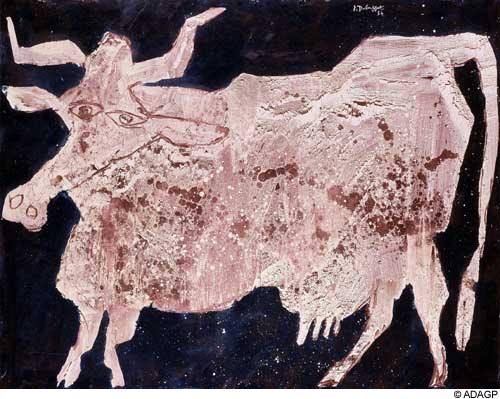
Jean Dubuffet, La belle encornée, 1954, oil on canvas

Jean Dubuffet, Le deviseur II, 1969-1970, epoxy resin and polyurethane paints
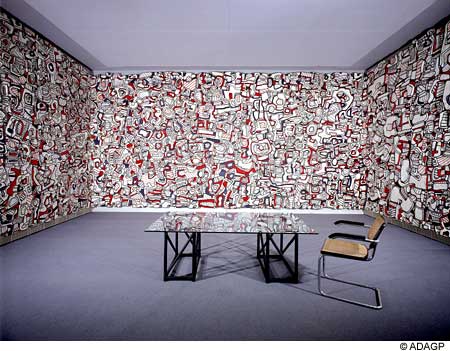
Jean Dubuffet, Cabinet Logologique, 1967-1969, epoxy resin and concrete with polyurethane paints
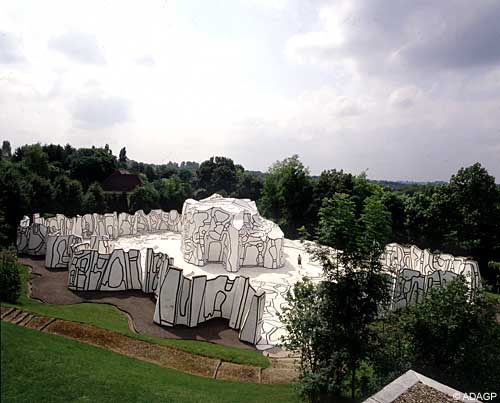
Jean Dubuffet, Closerie Falbala, 1971-1973, epoxy resin and concrete with polyurethane paints

Jean Dubuffet, Portrait d'homme, 1974, mixed media on paper

Jean Dubuffet, Mêle moments, 1976, mixed media on canvas
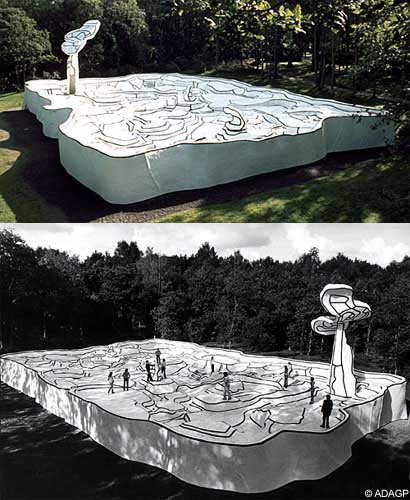
Jean Dubuffet, Jardin d'émail, 1974, epoxy resin and concrete with polyurethane paints
One of my most ecstatic art moments was visiting the Kröller-Müller Museum when in the Netherlands and encountering Dubuffet’s Jardin d’émail. Indescribable.
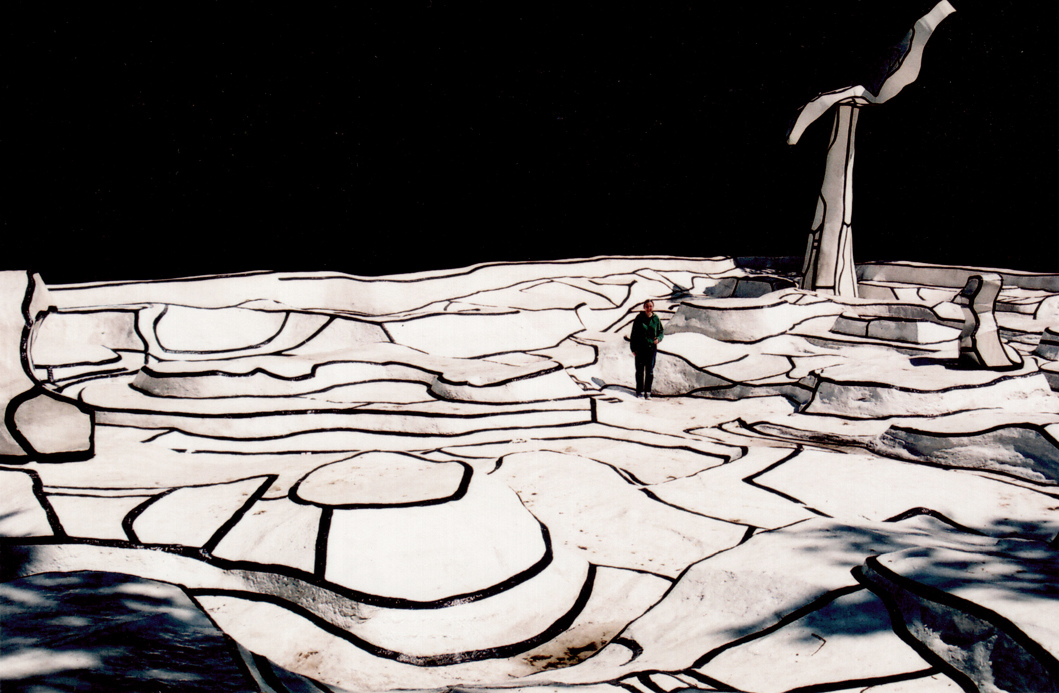
Rona Green atop Jardin d'émail
Dubuffet expressed that ‘Art should always make us laugh a little and frighten us a little, but never bore us.’

Jean Dubuffet driving some hot wheels
Put simply the guy is mind-blowing and his effect upon me has been profound.
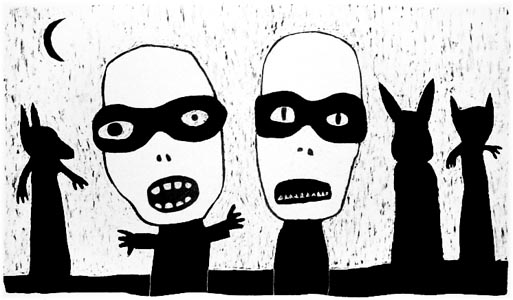
Rona Green, party, 1995, lithograph
So, who do you love?
Strokin’ is open
Posted: 19 February 2012 Filed under: Exhibitions, Rona | Tags: art, Australian Galleries, exhibition, Rona Green, Sydney 4 Comments

Australian Galleries Glenmore Road, Sydney, Australia
Strokin’ – an exhibition of prints, paintings and drawings by me – is now open at Australian Galleries Glenmore Road, Sydney, Australia and runs until Sunday 11 March.
Here are a few pics I snapped of the show installed at the gallery for your viewing pleasure.
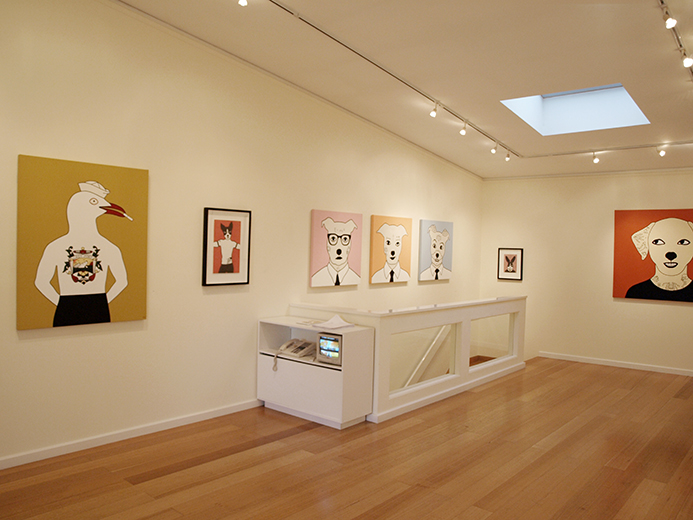
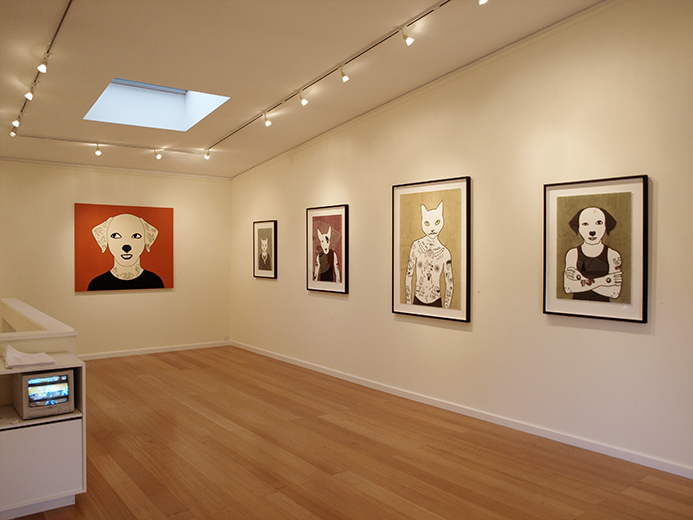
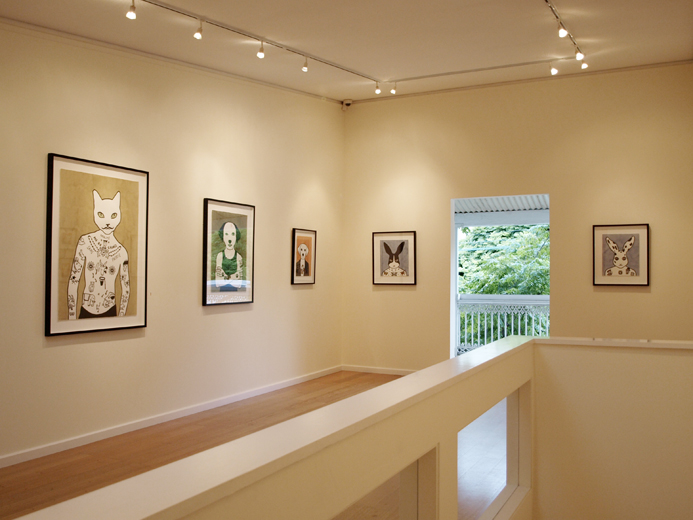

My favourite work in the show is The Surgeon as it pays homage to my cat Googie.

Rona Green, The Surgeon, 2010, linocut, ink and watercolour
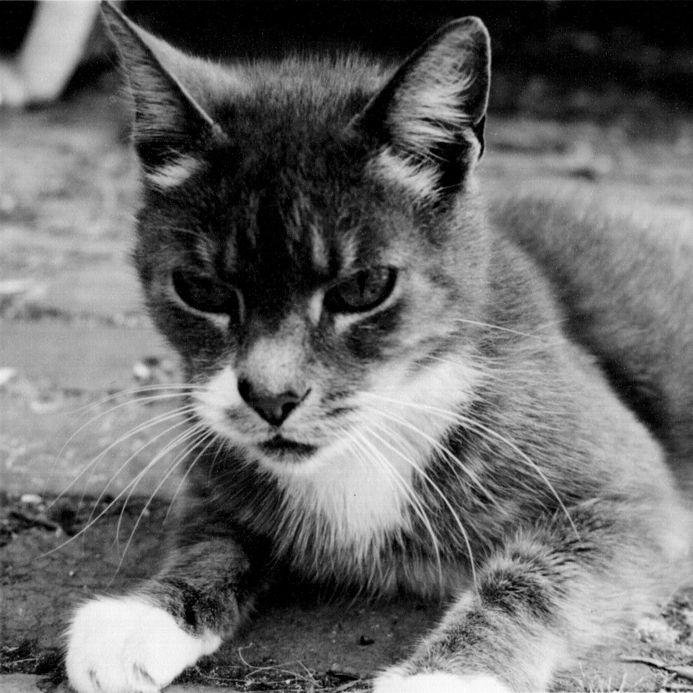
Googie Abwy (1992-2010)
If you are keen to see more work you can check out my artists page on the Australian Galleries website.
Greasy Rhys comes alive!
Posted: 12 February 2012 Filed under: Rona | Tags: art, creativity, inspiration, Rona Green 1 Comment
‘It would be vain to try to put into words that immeasurable sense of bliss which comes over me directly when a new idea awakens in me and begins to assume a definite form. I forget everything and behave like a madman.’
– Pyotr Ilich Tchaikovsky

Artists are often asked where their ideas come from. How the creative process works is difficult to describe verbally. So here is an illustration of the stream of consciousness that originated Greasy Rhys, who features on the invitation (image above) to my forthcoming exhibition Strokin’.
Let the show begin…
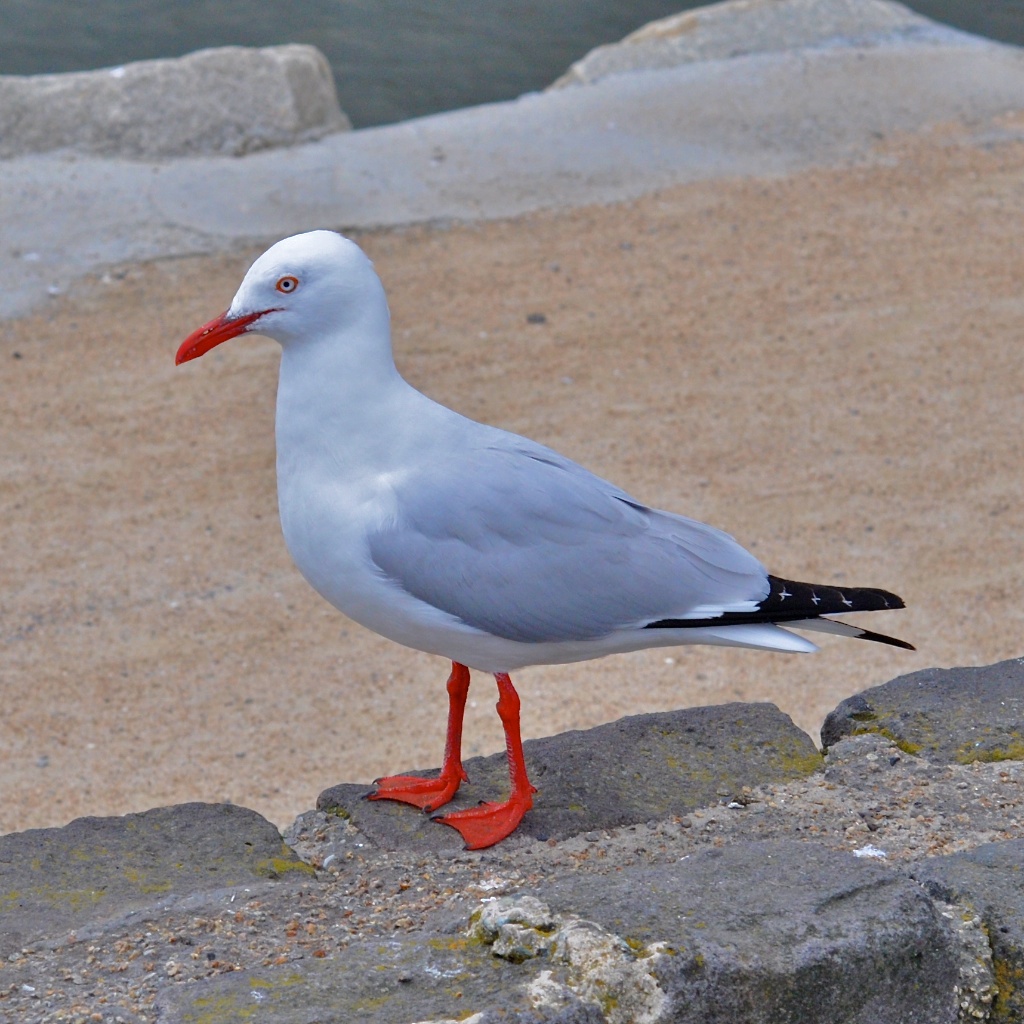
Silver Gull aka Seagull
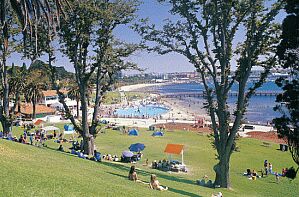
Eastern Beach, Geelong

Hot chips

Sailor smoking

Norman 'Sailor Jerry' Collins (1911-1973)
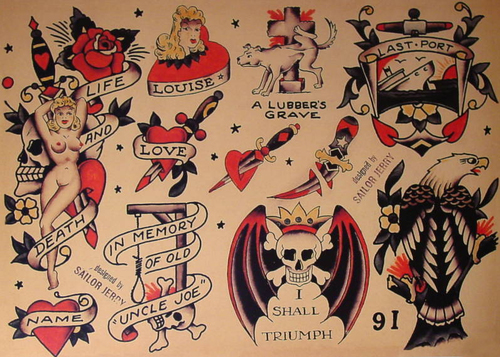
Sailor Jerry tattoo flash

Tattooed sailor
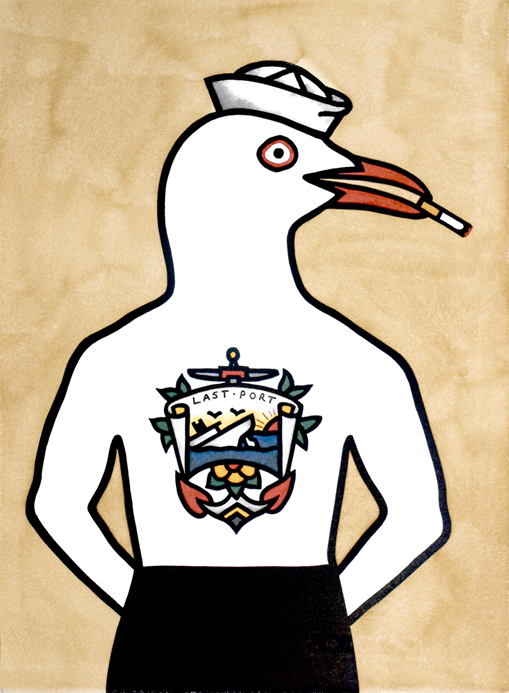
Rona Green, Greasy Rhys, 2008, linocut, ink & watercolour, 38 x 28 cm, edition 13

Rona Green, Greasy Rhys, 2011, acrylic on canvas, 112 x 91.5 cm
Fin!
 Rona Green