Precocious pets
Posted: 5 March 2012 Filed under: Artists, Rona | Tags: art, artists pets, Clement Freud, Lucian Freud, pets, Rona Green 4 Comments
‘Our perfect companions never have fewer than four feet.’
– Sidonie-Gabrielle Colette (1873-1954)
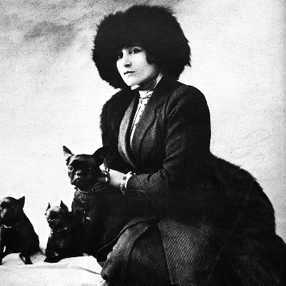
Colette and four legged friends
Pets are a favourite subject matter of mine.
The following prints are a set of portraits I created in homage to my pets Freddie, Byrd, Shane and Googie.
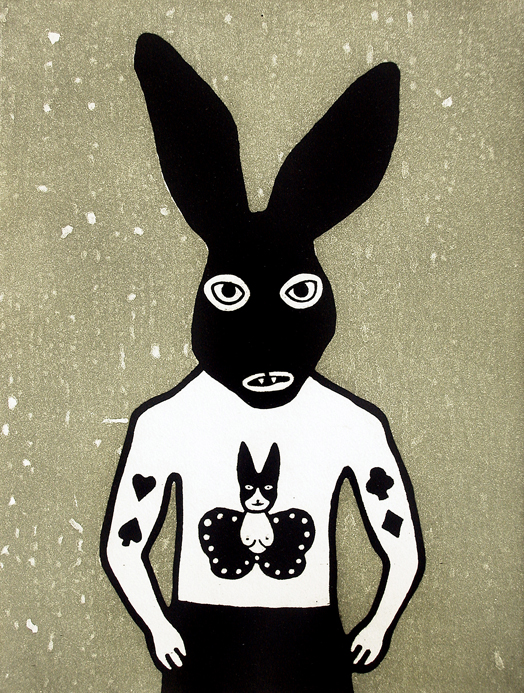
Rona Green, Lagomorphia, 2005, etching
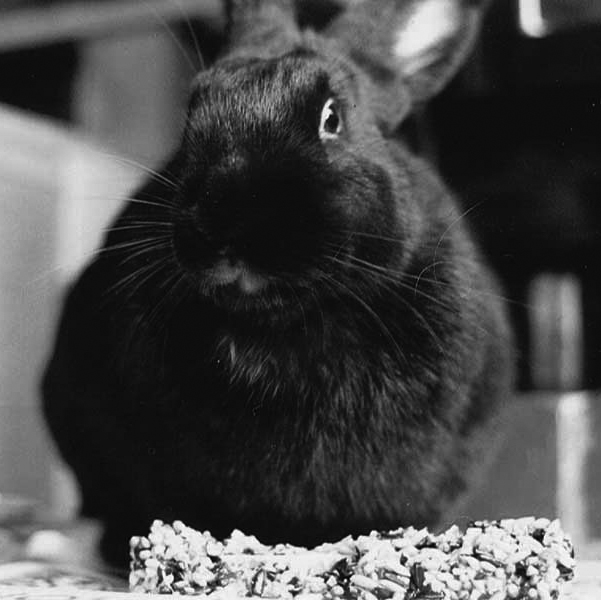
Freddie
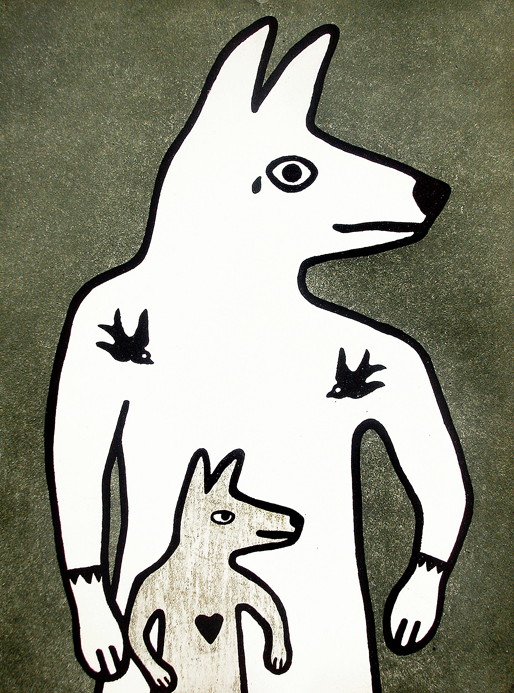
Rona Green, white Byrd, 2005, etching
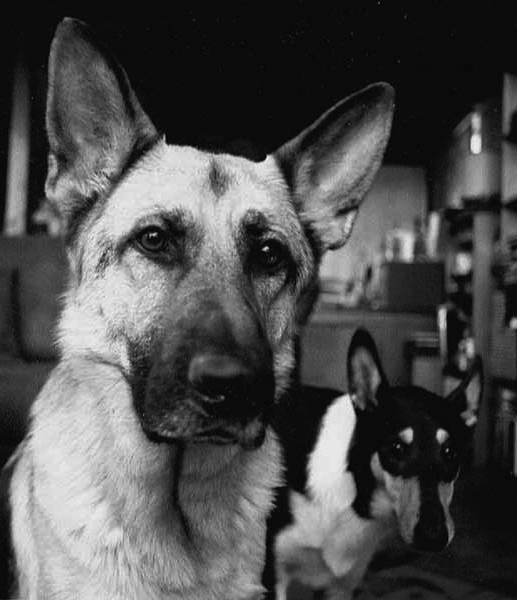
Byrd and Shane
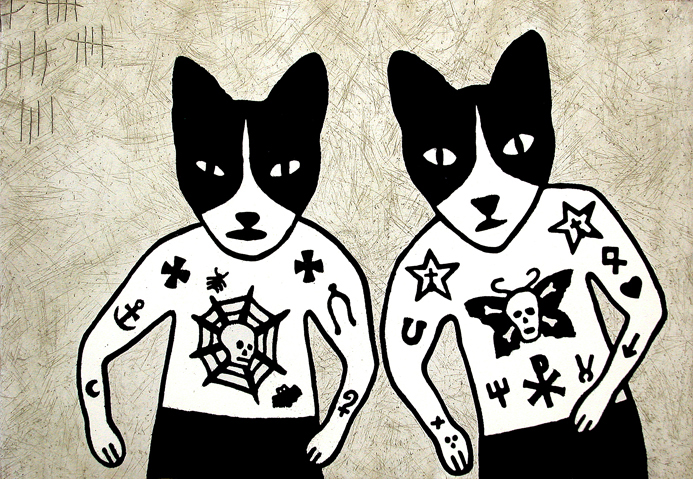
Rona Green, pretty boys, 2005, etching
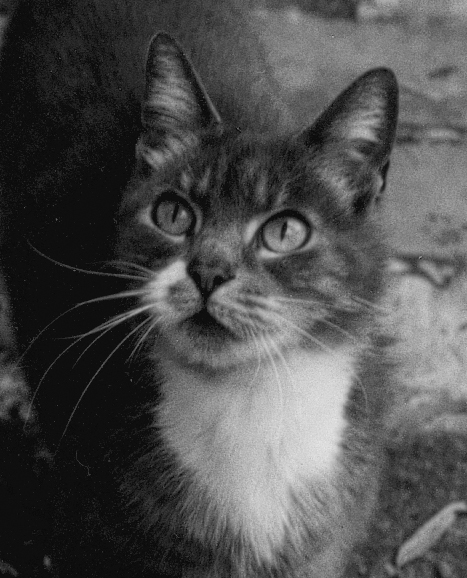
Googie
Another artist – whom I adore – who was also inspired to depict pets was Lucian Freud (1922-2011).
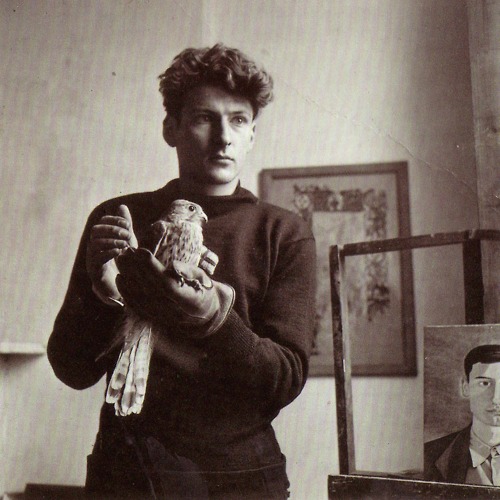
Lucian Freud, 1947
Lucian once said ‘A painter’s tastes must grow out of what so obsesses him in life that he never has to ask himself what it is suitable for him to do in art.’
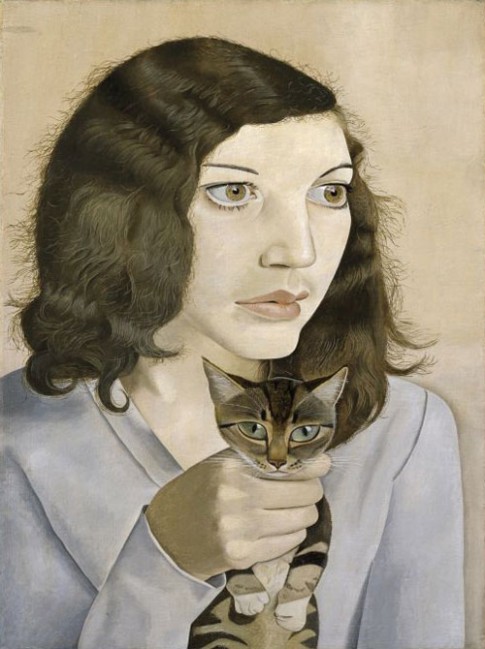
Lucian Freud, Girl with a Kitten, 1947, oil on canvas
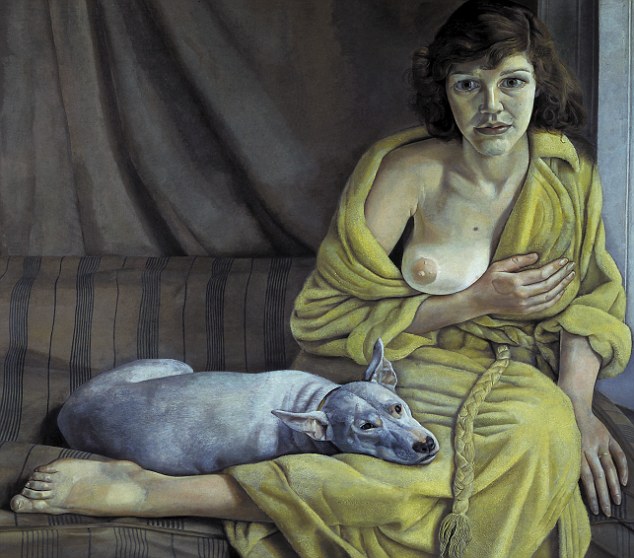
Lucian Freud, Girl with a White Dog, 1951, oil on canvas
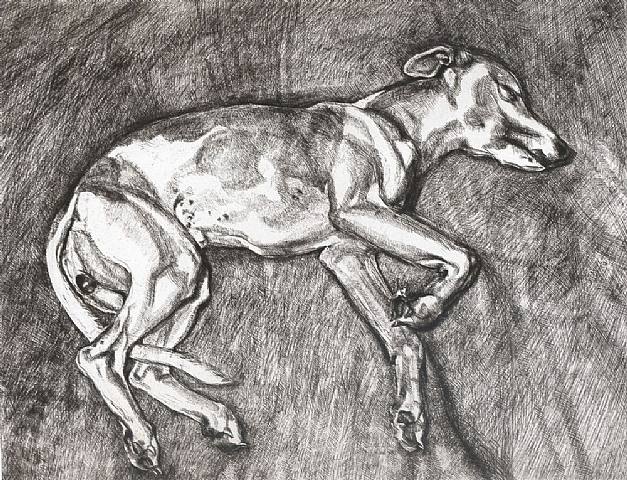
Lucian Freud, Eli, 2002, etching
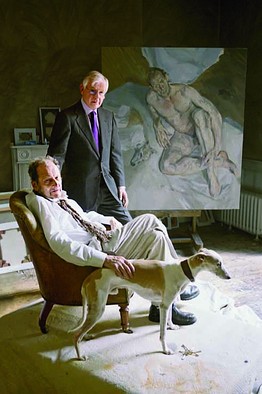
Lucian Freud and Eli with gallerist William Acquavella in front of the painting Portrait of the Hound, 2011
Lucian’s brother, Clement Freud (1924-2009), a broadcaster, writer, politician and chef, was also an animal fan.
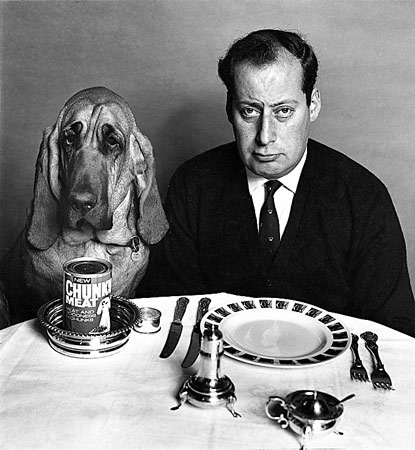
Clement Freud and Henry, 1966
So much so that he featured in a series of dog food commercials in the 1960’s:
Enjoy!
Who do you love?
Posted: 26 February 2012 Filed under: Artists, Rona | Tags: Adolf Wolfli, art, artist, Hans Prinzhorn, inspiration, Jean Dubuffet, Rona Green 12 Comments
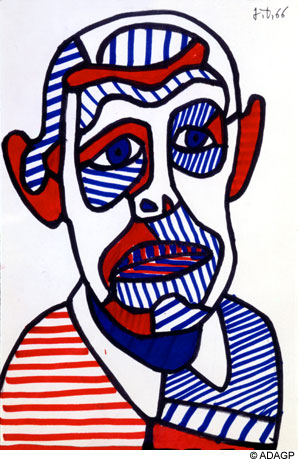
Jean Dubuffet, Self Portrait, 1966, marker pen on paper
‘For a very long time I was too humble […] and lacking in confidence and composure; and I suffered cruelly because of this, appearing in my own eyes to be nothing more than the most abject dog turd. It was only at a late stage – when in the end I had resigned myself to living like a dog turd without shame or regret and making the best of the situation – that it dawned on me that everyone else was also a dog turd.’
– Jean Dubuffet (1901-1985)
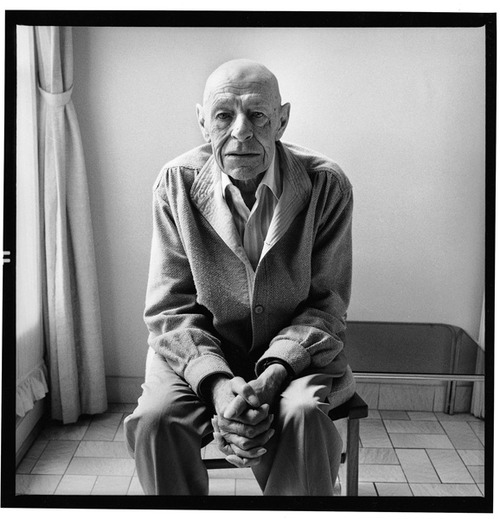
Portrait of Jean Dubuffet by Marc Trivier
I love Jean Dubuffet.
While studying at university, one afternoon in the library when flipping through books in the art section, I turned a page and saw a reproduction of Man Eating a Small Stone by Dubuffet.
It turned my world upside down.
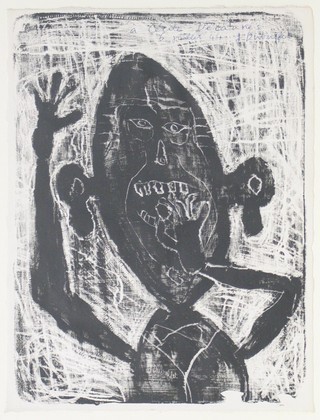
Jean Dubuffet, Man Eating a Small Stone, 1944, lithograph
Early in his life, Dubuffet was influenced by the German psychiatrist and art historian Hans Prinzhorn, and his book Bildnerei der Geisteskranken (Artistry of the Mentally Ill) published in 1922.

Hans Prinzhorn 1886-1933
Dubuffet collected an enormous amount of work by psychiatric patients, prisoners and children. He invented the term Art Brut (raw art) for the work produced by these non-professional artists. The collection is now housed at the Musée de l’Art Brut in Lausanne, Switzerland.
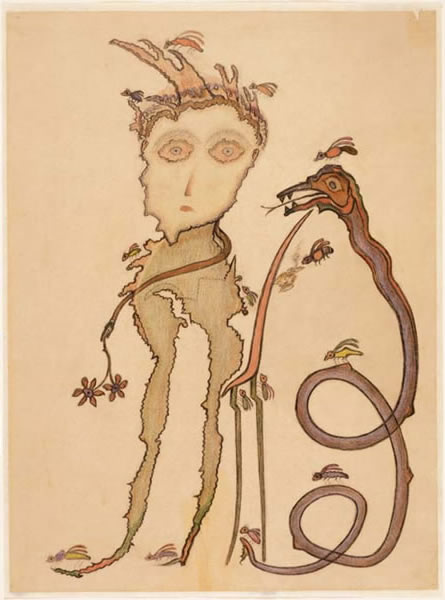
Heinrich Anton Müller, Man with flies and snake, c 1920s, crayon drawing

Adolf Wölfli, Saint Adolf wearing glasses, 1924, pencil on paper
Dubuffet once declared ‘For me, insanity is super sanity. The normal is psychotic. Normal means lack of imagination, lack of creativity.’

Jean Dubuffet, Pisser at the wall, 1945, lithograph
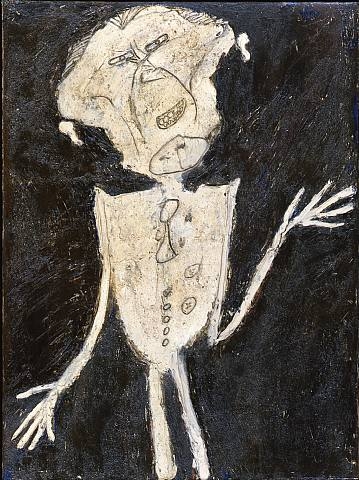
Jean Dubuffet, Bertelé Mondain, 1946, oil on canvas
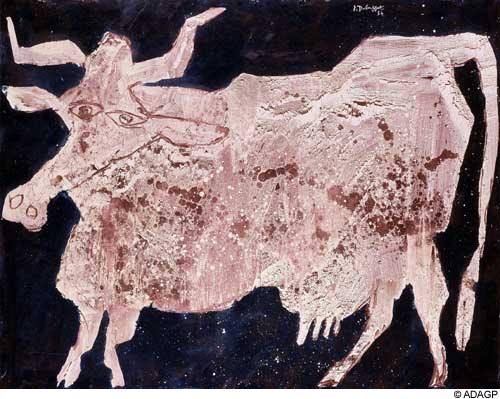
Jean Dubuffet, La belle encornée, 1954, oil on canvas

Jean Dubuffet, Le deviseur II, 1969-1970, epoxy resin and polyurethane paints
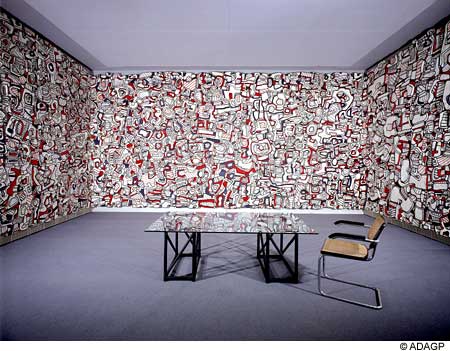
Jean Dubuffet, Cabinet Logologique, 1967-1969, epoxy resin and concrete with polyurethane paints
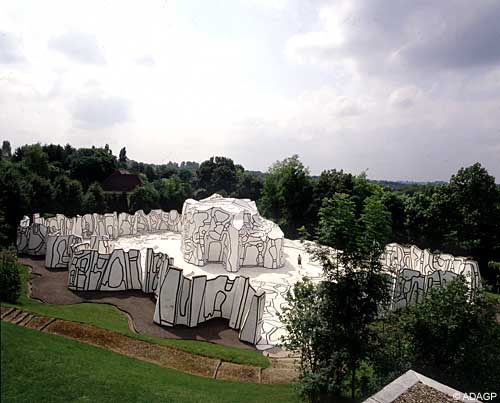
Jean Dubuffet, Closerie Falbala, 1971-1973, epoxy resin and concrete with polyurethane paints

Jean Dubuffet, Portrait d'homme, 1974, mixed media on paper

Jean Dubuffet, Mêle moments, 1976, mixed media on canvas
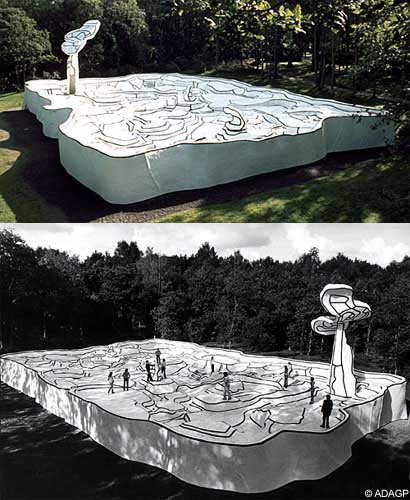
Jean Dubuffet, Jardin d'émail, 1974, epoxy resin and concrete with polyurethane paints
One of my most ecstatic art moments was visiting the Kröller-Müller Museum when in the Netherlands and encountering Dubuffet’s Jardin d’émail. Indescribable.
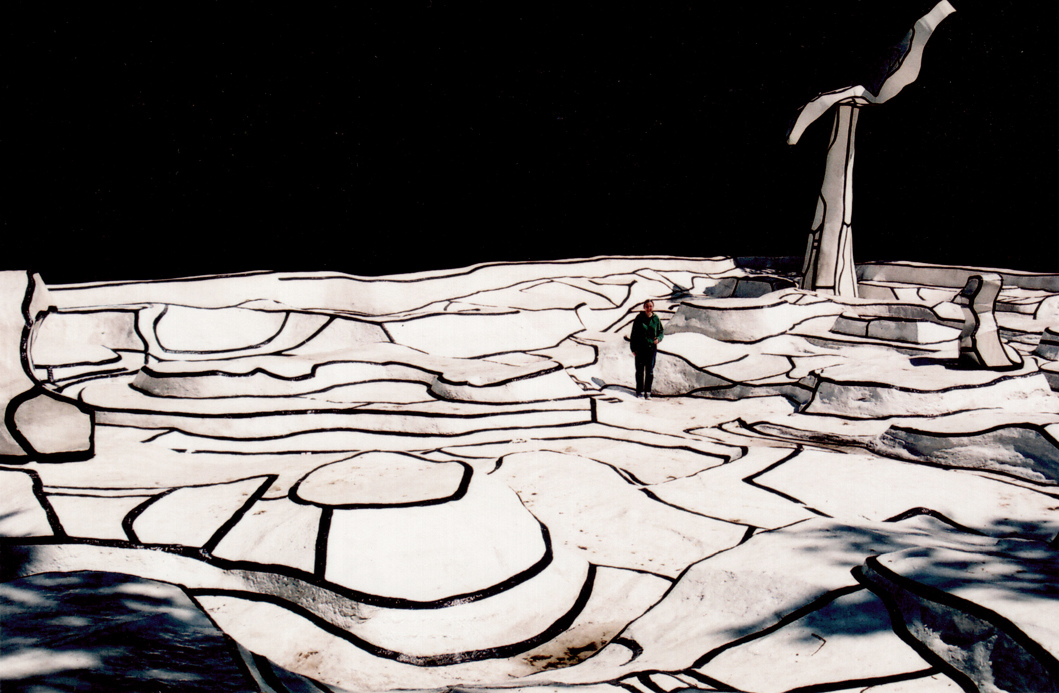
Rona Green atop Jardin d'émail
Dubuffet expressed that ‘Art should always make us laugh a little and frighten us a little, but never bore us.’

Jean Dubuffet driving some hot wheels
Put simply the guy is mind-blowing and his effect upon me has been profound.
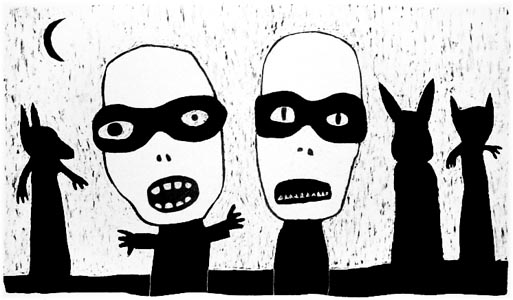
Rona Green, party, 1995, lithograph
So, who do you love?
Making sense of style
Posted: 7 February 2012 Filed under: Artists, Rona | Tags: art, artists, Rona Green 2 Comments
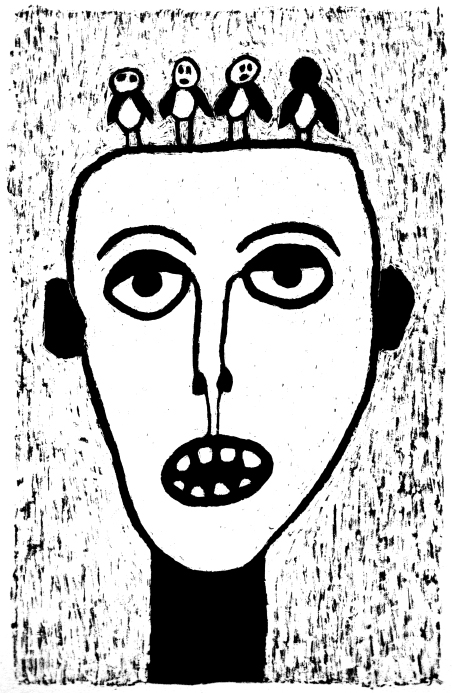
Rona Green, Bug Man, 1995, lithograph
When looking at an artists work I like to try and decipher who is in their ‘artistic family’ – who have they learnt from, who has influenced and inspired them.
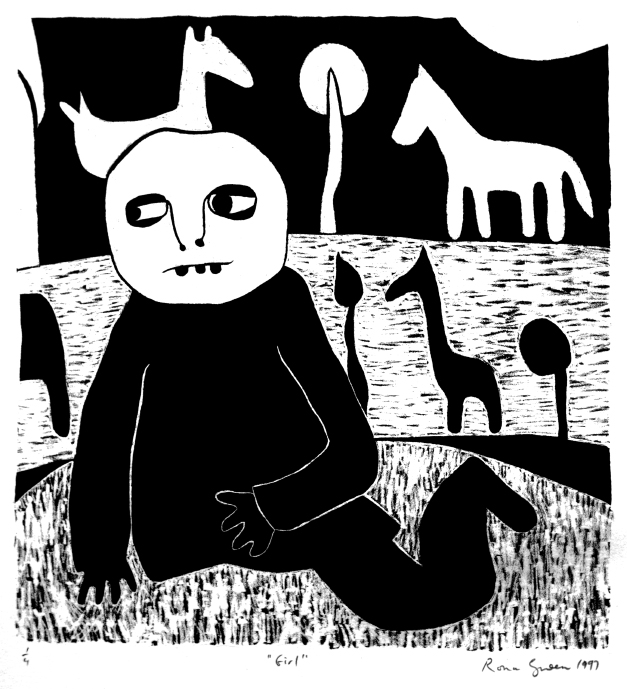
Rona Green, Girl, 1995, lithograph
The following is a run down of my art family tree:
Egyptian art

Annubis God of the Dead Leaning over Sennutem's Mummy, Tomb of Sennutem, Luxor, Thebes, Egypt
African art
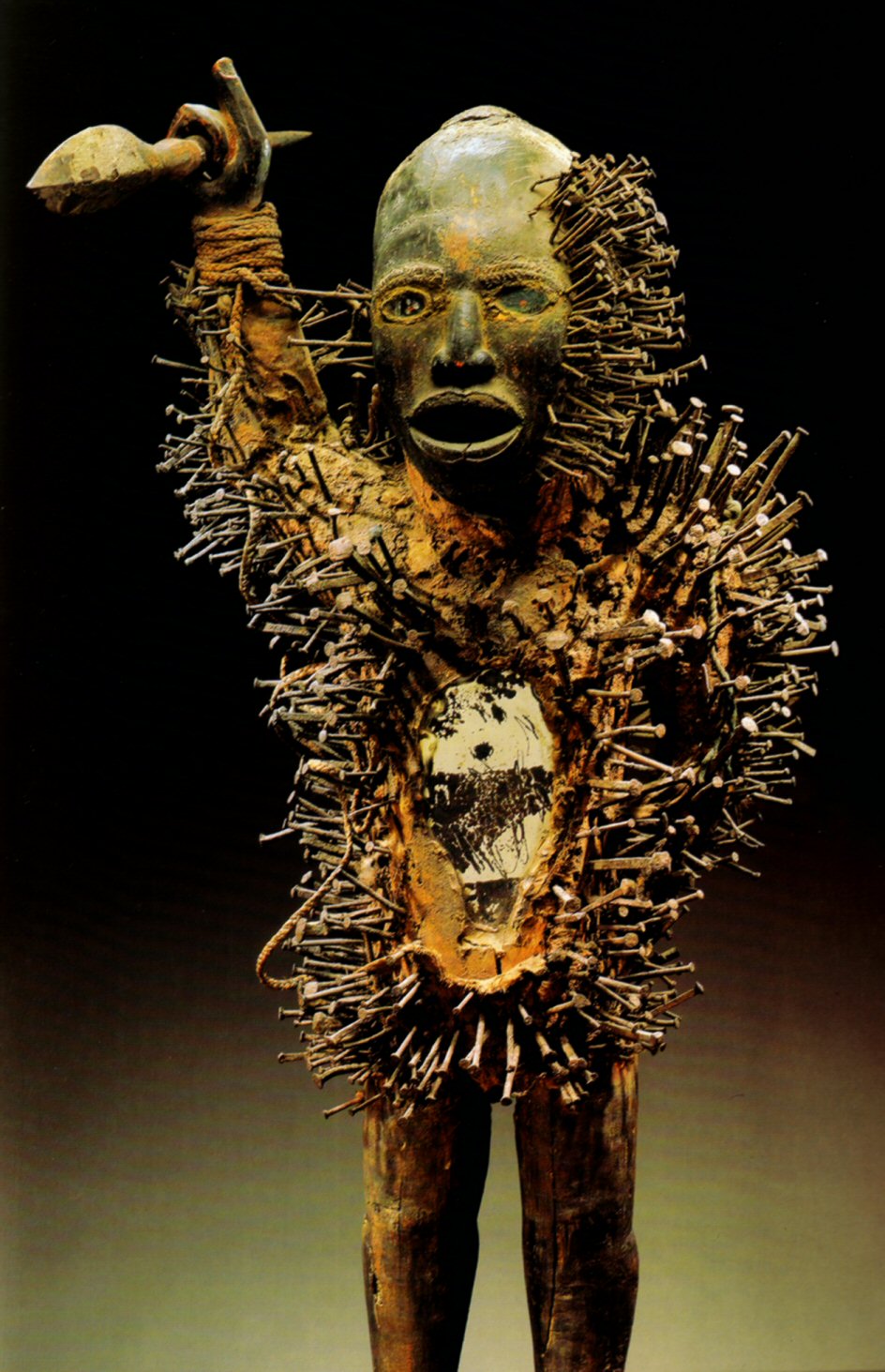
Bakongo Nkondi Fetish, Lower Zaire, Yombe
Pablo Picasso
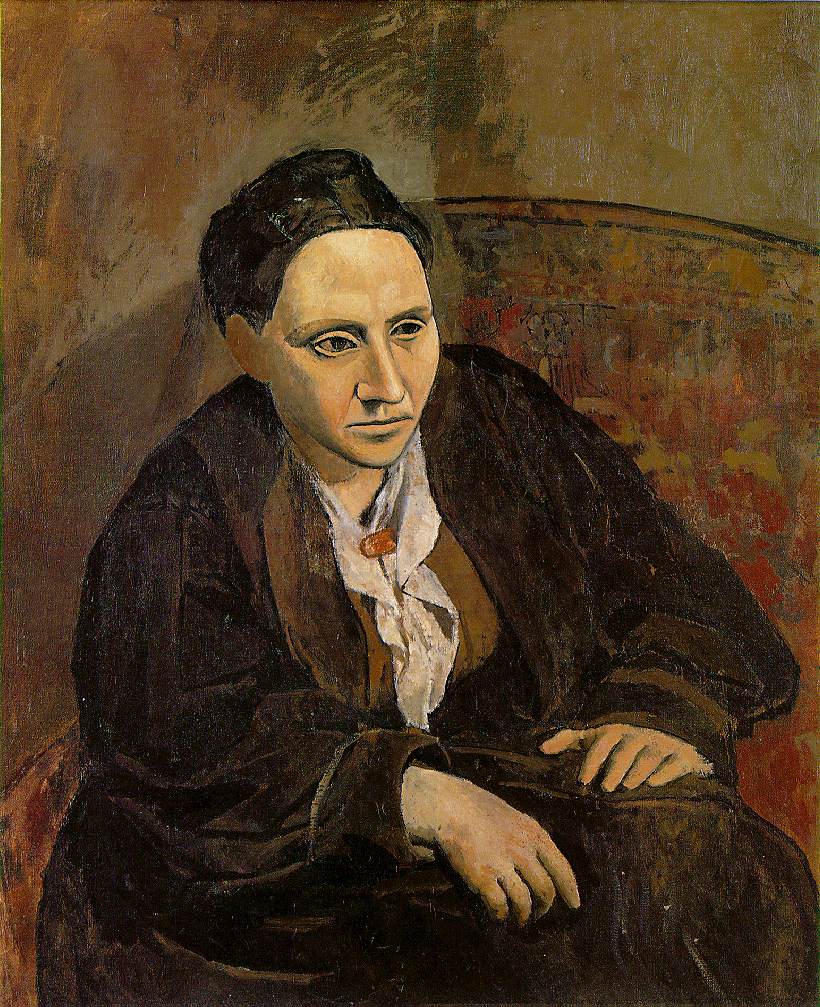
Pablo Picasso, Portrait of Gertrude Stein, 1906, oil on canvas
Alberto Giacometti
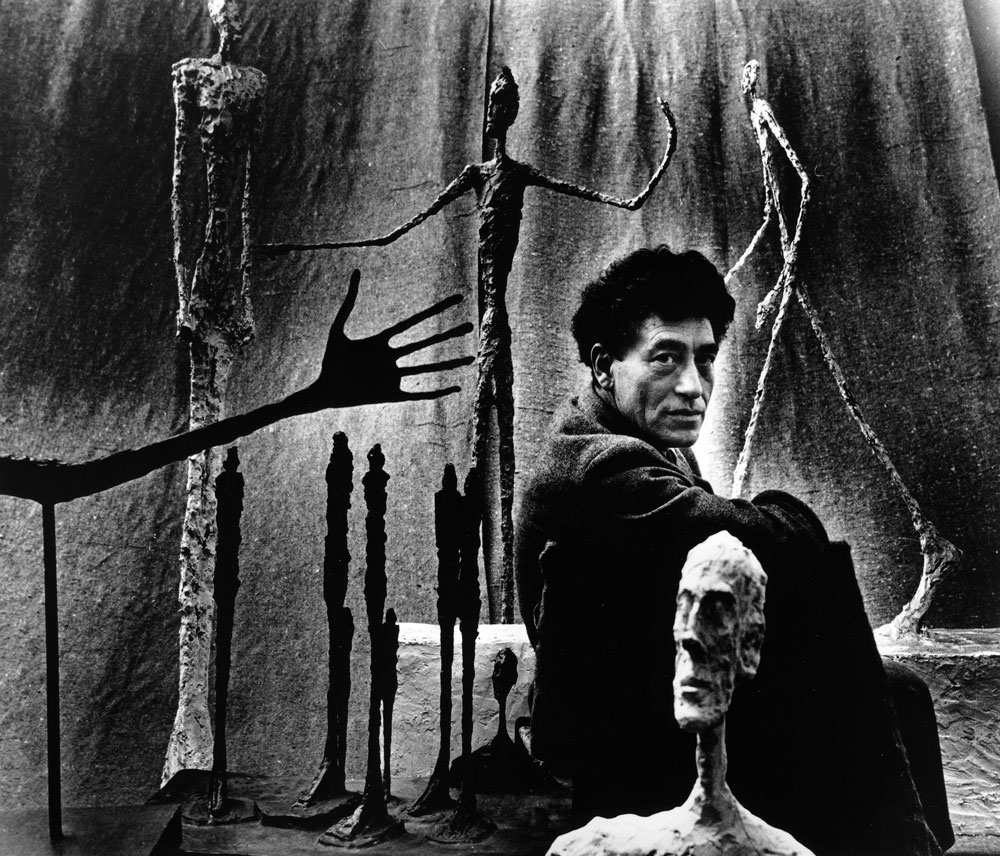
Portrait of Alberto Giacometti with his sculpture by Gordon Parks, 1951
Andy Warhol

Andy Warhol, Self Portrait with Skull, 1977, acrylic and silkscreen ink on canvas
Richard Avedon
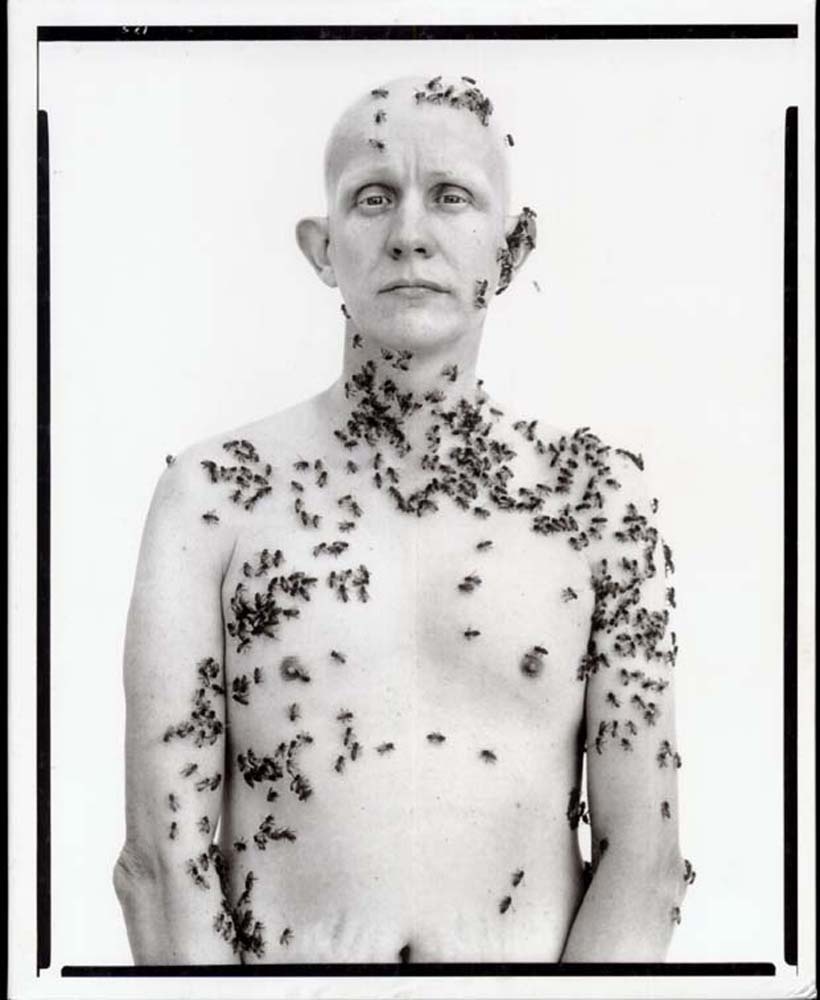
Richard Avedon, Ronald Fischer, beekeeper, Davis, California, 1981, gelatin silver print
Robert Mapplethorpe

Robert Mapplethorpe, Self Portrait, 1980, gelatin silver print
Diane Arbus

Diane Arbus, Tattooed man at a carnival, Md., 1970, gelatin silver print
Paul Klee

Paul Klee, Senecio, 1922, oil on canvas
Jean Dubuffet
Jean Dubuffet, Man Eating a Small Stone, 1944, lithograph
John Brack
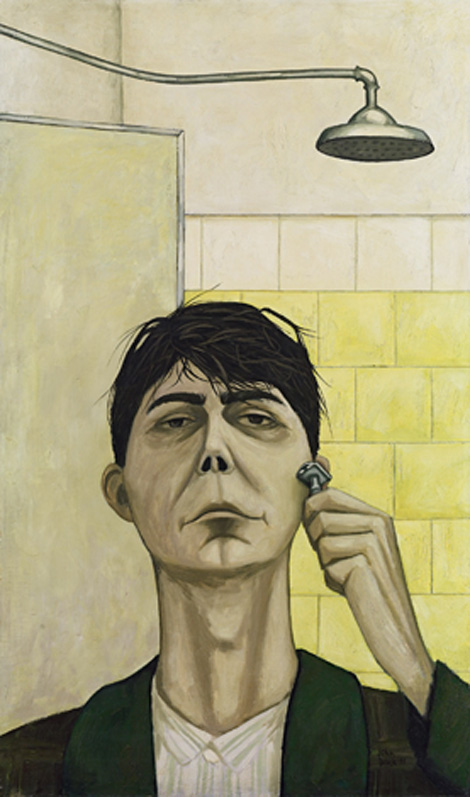
John Brack, Self Portrait, 1955, oil on canvas
David Hockney

David Hockney with his painting Mr and Mrs Clark and Percy, 1970-71, acrylic on canvas
Peter Blake
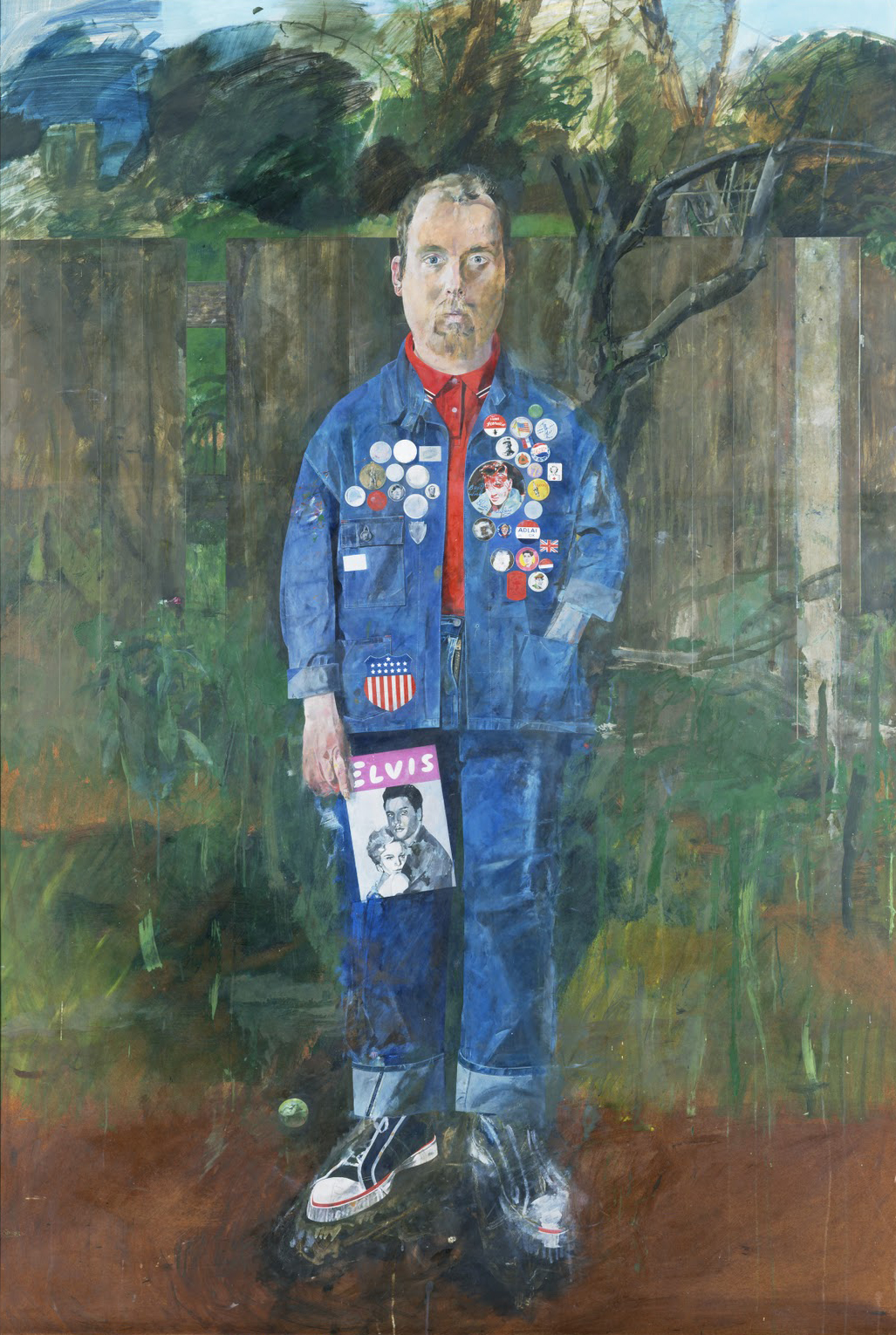
Peter Blake, Self Portrait with Badges, 1961, oil on board
Francis Bacon
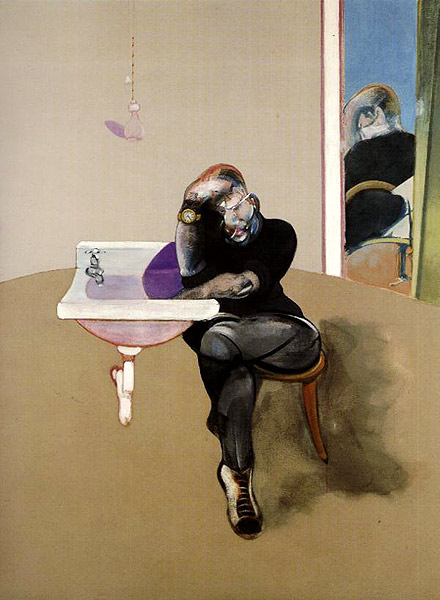
Francis Bacon, Self Portrait, 1973, oil on canvas
Philip Guston

Philip Guston with his work Painter in Bed, 1973, oil on canvas
Gilbert and George
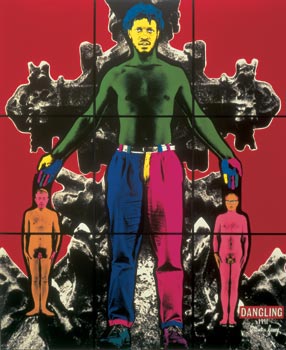
Gilbert and George, Dangling, 1991, mixed media
Ed Paschke

Ed Paschke, Sunburn, 1970, oil on canvas
And back to me…

Rona Green, Chips, 2008, linocut, ink and watercolour

Rona Green, The Surgeon, 2010, linocut, ink and watercolour
Hope you enjoyed the climb!
 Rona Green